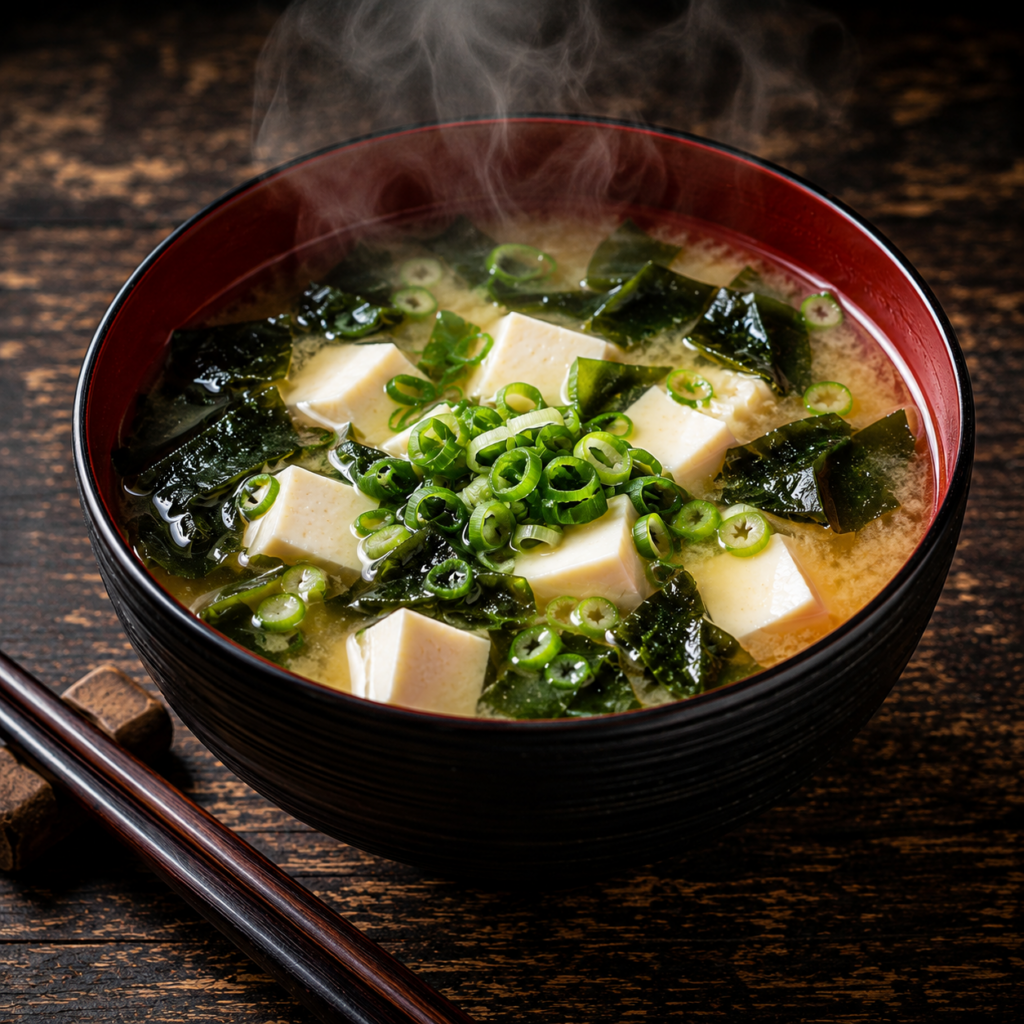
Miso soup is a traditional Japanese soup made with savory miso paste, dashi broth, tofu, seaweed, and green onions. This comforting dish is served daily in many Japanese households and restaurants. It is light, nutritious, rich in umami flavor, and incredibly easy to prepare. Whether you are looking for a healthy Asian soup recipe, a low-calorie Japanese appetizer, or a traditional miso soup recipe, this dish delivers authentic flavor with minimal ingredients.
Miso soup is packed with probiotics, plant-based protein, vitamins, and minerals, making it a popular choice for healthy eating. This homemade miso soup recipe is perfect for breakfast, lunch, dinner, or as a side dish alongside sushi, rice bowls, and grilled fish.
Why Miso Soup Is Considered a Superfood
Many nutritionists consider miso soup a nutrient-dense food due to its combination of fermented ingredients and plant-based nutrition.
Benefits include:
Rich in beneficial probiotics
Low in calories
Source of plant protein
Contains essential minerals
Supports digestive health
Provides antioxidants
Naturally satisfying and filling
Regular consumption of fermented foods like miso may contribute to a balanced gut microbiome and overall wellness.
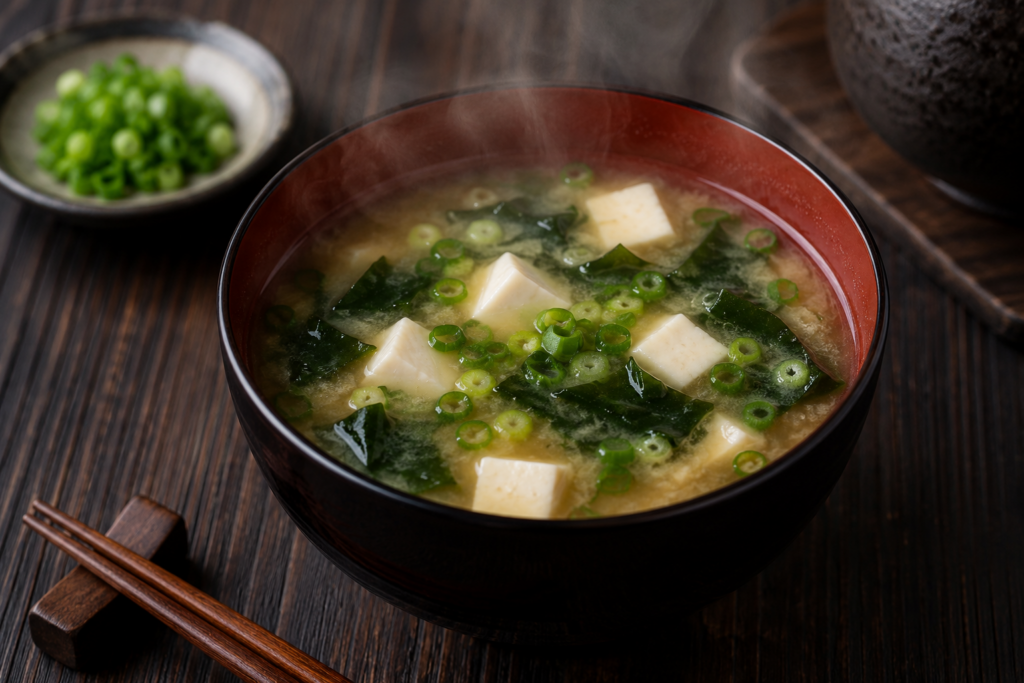
Authentic Japanese miso soup with silky tofu, wakame, and fresh scallions served in a warm umami-rich dashi broth.
Ingredients For Miso Soup
Dashi Stock
Traditional Japanese soup stock made from kombu seaweed and bonito flakes. It creates the signature umami flavor.
White Miso Paste
Fermented soybean paste that provides a rich, salty, and slightly sweet taste.
Tofu
Adds protein and creates a silky texture.
Wakame Seaweed
A nutritious sea vegetable that expands when soaked.
Green Onions
Provide freshness and mild onion flavor.
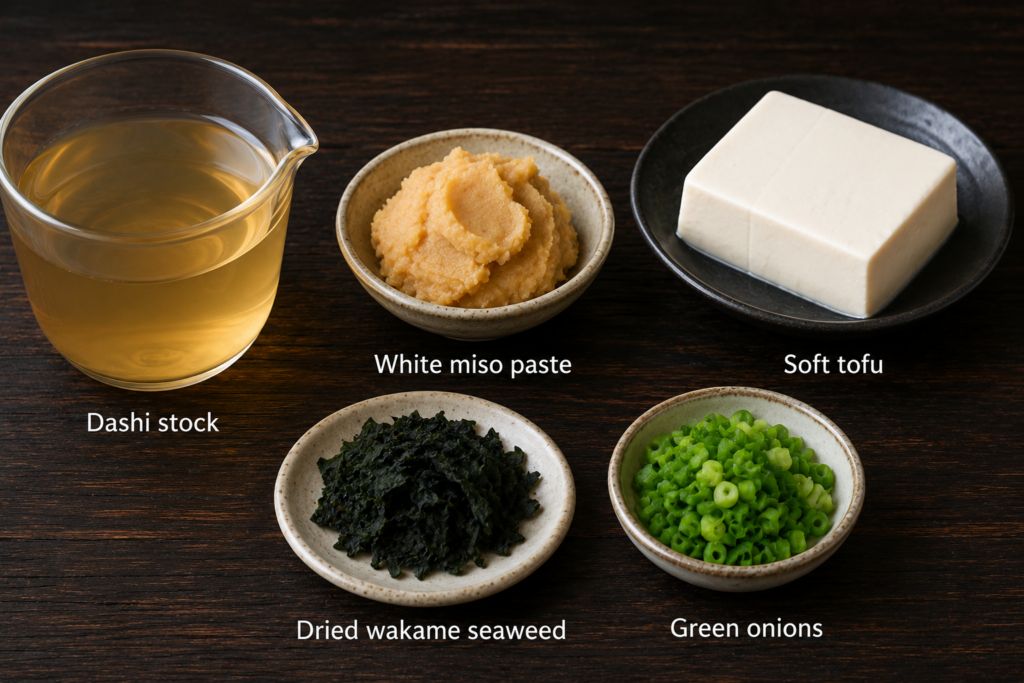
Essential ingredients for authentic Japanese miso soup: dashi stock, white miso paste, soft tofu, wakame seaweed, and fresh green onions.
How to make Restaurant style Miso Soup
Step 1: Rehydrate the Wakame Seaweed
Place 2 tablespoons of dried wakame seaweed in a small bowl and cover it with cold water. Let it soak for about 5 minutes. The seaweed will expand significantly as it absorbs water. Once softened, drain well and set aside. Avoid soaking it for too long, as it can become overly soft.
Step 2: Prepare the Dashi Broth
Pour 4 cups of dashi stock into a medium saucepan. Place the saucepan over medium heat and slowly bring the broth to a gentle simmer. Do not allow it to reach a rolling boil. The dashi serves as the flavorful foundation of the soup and provides the signature Japanese umami taste.
Step 3: Add the Tofu
Cut 150 grams (about 5 ounces) of soft or silken tofu into small bite-sized cubes. Carefully add the tofu cubes to the warm dashi broth. Stir gently to avoid breaking the tofu. Let the tofu heat through for 2 to 3 minutes.
Step 4: Incorporate the Wakame Seaweed
Add the rehydrated wakame seaweed to the saucepan. Stir gently and allow it to simmer for about 1 minute. The seaweed will add a subtle ocean flavor and valuable nutrients to the soup.
Step 5: Prepare the Miso Mixture
Place 3 tablespoons of white miso paste in a small bowl. Ladle about ¼ cup of the hot broth from the saucepan into the bowl. Whisk or stir until the miso paste completely dissolves and forms a smooth mixture without lumps.
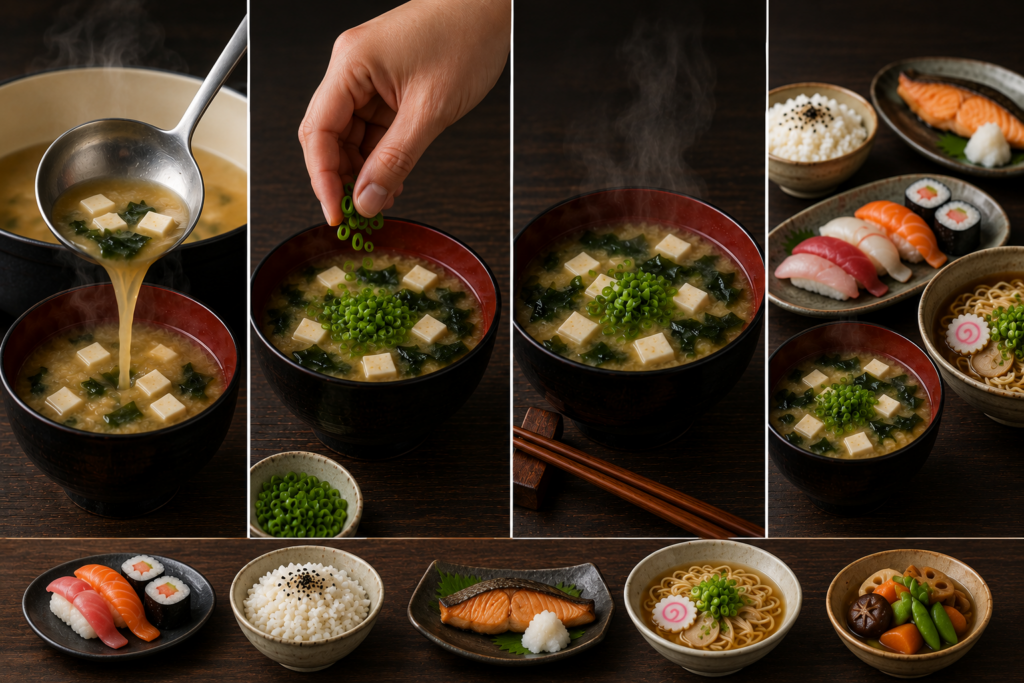
Smoothly dissolving miso paste into warm dashi broth using a fine-mesh strainer for a silky, lump-free soup.
Step 6: Add the Miso to the Soup
Reduce the heat to low. Slowly pour the dissolved miso mixture back into the saucepan while stirring gently. This ensures the miso is evenly distributed throughout the broth and prevents clumping.
Step 7: Avoid Boiling the Soup
Once the miso has been added, do not let the soup boil. Keep the heat very low and allow the soup to warm gently for 1 to 2 minutes. Boiling can diminish the delicate flavor of the miso and reduce some of its beneficial probiotic properties.
Step 8: Add the Green Onions
Thinly slice 2 green onions and stir most of them into the soup. Reserve a small amount for garnish. The green onions add freshness and a mild onion flavor that complements the savory broth.
Step 9: Taste and Adjust
Taste the soup before serving. If desired, add a small amount of soy sauce for extra savory flavor. Be cautious, as miso paste is already naturally salty.
Step 10: Serve Immediately
Ladle the hot miso soup into serving bowls. Garnish with the remaining sliced green onions. Serve immediately while warm alongside sushi, rice dishes, grilled fish, ramen, or other Japanese-inspired meals.
Freshly prepared miso soup garnished with green onions and served hot alongside classic Japanese dishes for a comforting meal.
How to Make Vegan Miso Soup
Traditional dashi often contains bonito flakes, but vegan versions are easy to prepare.
Use:
Kombu seaweed
Shiitake mushrooms
White miso paste
Tofu
Wakame
Green onions
The result is a delicious plant-based miso soup with plenty of umami flavor.
Miso Soup for Weight Loss
People looking for healthy low-calorie meals often choose miso soup because it is satisfying without being heavy.
Reasons it supports weight-management goals:
Low calorie count
High water content
Rich umami flavor increases satisfaction
Contains protein from tofu
Helps reduce cravings for high-calorie snacks
When included as part of a balanced diet, miso soup can be a smart addition to healthy eating plans.
Variations of Miso Soup Around Japan
Different regions of Japan have developed their own unique versions.
Hokkaido Miso Soup
Often includes potatoes, corn, and butter.
Tokyo-Style Miso Soup
Usually lighter with white miso and tofu.
Kyoto Miso Soup
Known for its delicate and refined flavors.
Nagoya Red Miso Soup
Features rich red miso with a stronger umami profile.
These regional variations showcase the diversity of Japanese cuisine.
Substitutions for USA/Europe Grocery Stores
Original Ingredient
Substitute
Dashi Stock
Vegetable broth
White Miso Paste
Yellow miso paste
Wakame Seaweed
Spinach or kale
Soft Tofu
Silken tofu
Green Onion
Chives
Bonito-Based Dashi
Vegan mushroom broth
These substitutions make it easier to create homemade miso soup using ingredients commonly available in American and European supermarkets.
Storage & Reheating Tips
How to Store Leftovers
Transfer any leftover cooled soup into an airtight container and store it in your refrigerator for up to 2 to 3 days. Because it contains live probiotics, the sooner you consume it, the better.
Can You Freeze Miso Soup?
You can freeze the plain dashi-miso broth base for up to 2 months. However, do not freeze the soup with tofu and green onions inside. Freezing completely destroys the cell structure of silken tofu, turning it into a spongy, unappealing rubbery texture.
The Right Way to Reheat
Pour the soup into a saucepan over low heat. Bring it slowly back up to a warm, comforting serving temperature (75 C or 165 F). Never microwave or boil it. Intense bubbling heat kills off the beneficial gut-friendly bacteria and permanently separates the suspended paste particles, making your broth look split and thin.
Final Thoughts
Authentic miso soup is much more than a simple Japanese soup recipe. It represents centuries of culinary tradition, nutritional wisdom, and balanced flavor. Whether you are making a classic tofu miso soup, experimenting with regional variations, or creating a vegan version, this comforting dish delivers incredible taste with minimal effort.
By using quality miso paste, flavorful dashi stock, and fresh ingredients, you can enjoy restaurant-style Japanese miso soup at home anytime. Its rich umami flavor, probiotic benefits, and versatility make it one of the healthiest and most beloved dishes in Asian cuisine.
Miso Soup is a classic Japanese comfort food made with savory dashi broth, fermented miso paste, soft tofu, wakame seaweed, and fresh green onions. Known for its rich umami flavor and nourishing qualities, this traditional soup is a staple in Japanese cuisine and is often served alongside sushi, rice dishes, and grilled seafood. Light yet satisfying, homemade miso soup comes together in just 20 minutes and is packed with protein, minerals, and probiotics from the fermented miso. Whether you're looking for a healthy Japanese soup recipe, a quick appetizer, or a warming meal starter, this authentic miso soup delivers restaurant-quality flavor with simple ingredients and minimal effort. Perfect for both beginners and experienced home cooks, it's a timeless dish that brings the comforting taste of Japan to your table.
Main Ingredients
4cups dashi stocks
3tbsp white miso paste
150g soft tofu (cubed)
2tbsp dried wakame seaweed
2 green onion (thinly sliced)
Instructions
1
Step 1: Prepare the Wakame :Place dried wakame seaweed in a bowl of water and soak for 5 minutes until expanded. Drain and set aside.
2
Step 2: Heat the Dashi :Pour the dashi stock into a medium saucepan and heat over medium heat until hot but not boiling.
3
Step 3: Add Tofu :Carefully add cubed tofu to the hot broth. Simmer gently for 2–3 minutes.
4
Step 4: Add Seaweed :Stir in the soaked wakame seaweed and allow it to cook for another minute.
5
Step 5: Dissolve Miso Paste :Place miso paste in a small bowl. Add a few tablespoons of hot broth and whisk until smooth.
6
Step 6: Combine :Slowly stir the dissolved miso mixture back into the soup.
7
Step 7: Avoid Boiling :Do not boil the soup after adding miso. High heat can destroy beneficial probiotics and alter the flavor.
8
Step 8: Garnish and Serve :Top with sliced green onions and serve immediately.
Nutrition Facts
Servings 4
Amount Per Serving
Calories75kcal
% Daily Value *
Total Fat3g5%
Sodium650mg28%
Total Carbohydrate5g2%
Dietary Fiber1g4%
Protein6g12%
Calcium 80 mg
Iron 1 mg
* Percent Daily Values are based on a 2,000 calorie diet. Your daily value may be higher or lower depending on your calorie needs.
Note
Do not boil the soup after adding miso paste. High heat can reduce the delicate flavor and beneficial probiotics found in miso.
Use soft or silken tofu for the most authentic texture and mouthfeel.
Dissolve the miso paste separately in a small amount of hot broth before adding it to the pot to prevent lumps.
For a vegan version, use kombu or shiitake mushroom dashi instead of bonito-based dashi.
Add vegetables such as mushrooms, spinach, napa cabbage, or daikon radish for extra nutrition and variety.
Serve immediately after preparation for the freshest flavor and best texture.
Store leftovers in the refrigerator for up to 3 days and reheat gently over low heat without boiling.
Fresh green onions should be added just before serving to maintain their bright color and crisp flavor.
Use high-quality dashi stock for the most authentic restaurant-style Japanese miso soup.
Taste before adding extra salt or soy sauce, as miso paste is naturally salty.
This soup pairs perfectly with sushi, rice bowls, teriyaki chicken, grilled salmon, tempura, and ramen dishes.
Miso soup is naturally low in calories, making it an excellent choice for a healthy appetizer or light meal.
Keywords:
miso soup recipe, authentic miso soup, homemade miso soup, Japanese miso soup, traditional Japanese soup, easy miso soup recipe, healthy Asian soup recipe, vegan miso soup, vegetarian miso soup, tofu miso soup, Japanese comfort food, dashi soup recipe, fermented soybean soup, low calorie Japanese soup, restaurant style miso soup, quick Japanese soup recipe, homemade Japanese soup, classic miso soup, healthy Japanese recipe, umami soup recipe, Japanese breakfast soup, simple Asian soup recipe, traditional miso broth, probiotic soup recipe, wakame seaweed soup, tofu and seaweed soup, authentic Japanese cuisine, healthy fermented foods, Japanese appetizer recipe, easy tofu soup recipe
Pin this recipe to share with your friends and followers.
Samantha Doe
Food and Lifestyle Blogger
Hi, I'm Samantha, a full-time food blogger, mother of 2 beautiful daughters and a lovely wife. I live in New Jersey with my family. Loves traveling, sharing new recipes, and spending time with my family.