

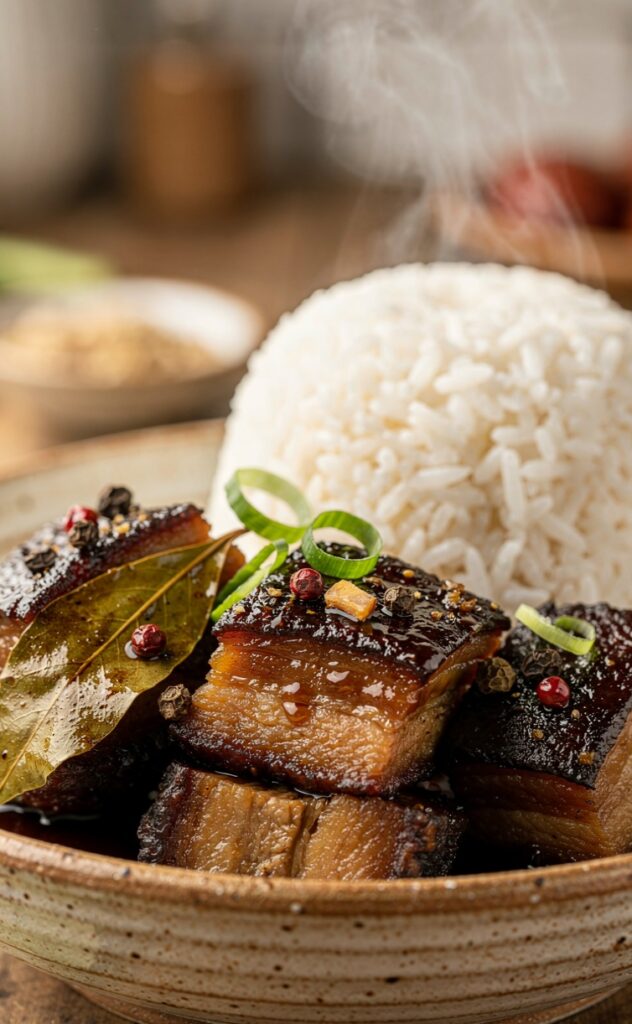

Filipino Pork Adobo is one of the most beloved dishes in Philippines cuisine and a true symbol of Filipino comfort food. Known for its bold, savory, tangy, and garlicky flavors, this classic Filipino pork dish has become popular worldwide for its simplicity and rich taste. If you are looking for an authentic Filipino pork adobo recipe, this guide will show you exactly how to make pork adobo at home using simple ingredients and traditional cooking methods. Whether you are a beginner or an experienced home cook, this easy pork adobo recipe is perfect for creating a hearty pork dinner for your family.
What makes this the absolute best pork adobo recipe is its beautifully simple, minimalist foundation. By combining thick, tender pork chunks with a handful of everyday pantry staples, you create a complex garlic soy pork recipe that rivals any restaurant. The secret lies in a traditional braised pork recipe technique: you marinate pork in a rich blend of soy sauce, white vinegar, pungent garlic cloves, earthy bay leaves, and cracked black peppercorns. This allows the savory pork adobo flavors to penetrate deep into the meat before it is left to simmer slowly over low heat cooking.
Many people love homemade pork adobo because it is easy to prepare, budget-friendly, and ideal as a one-pot Filipino meal. It pairs beautifully with steamed rice, making it one of the most satisfying rice meal recipes for lunch or dinner. If you have been searching for the best pork adobo recipe with soy sauce and vinegar, this easy Filipino pork adobo recipe at home delivers authentic taste in every bite. Among Filipino food recipes and Southeast Asian dishes, pork adobo remains one of the most comforting and timeless meals you can make.
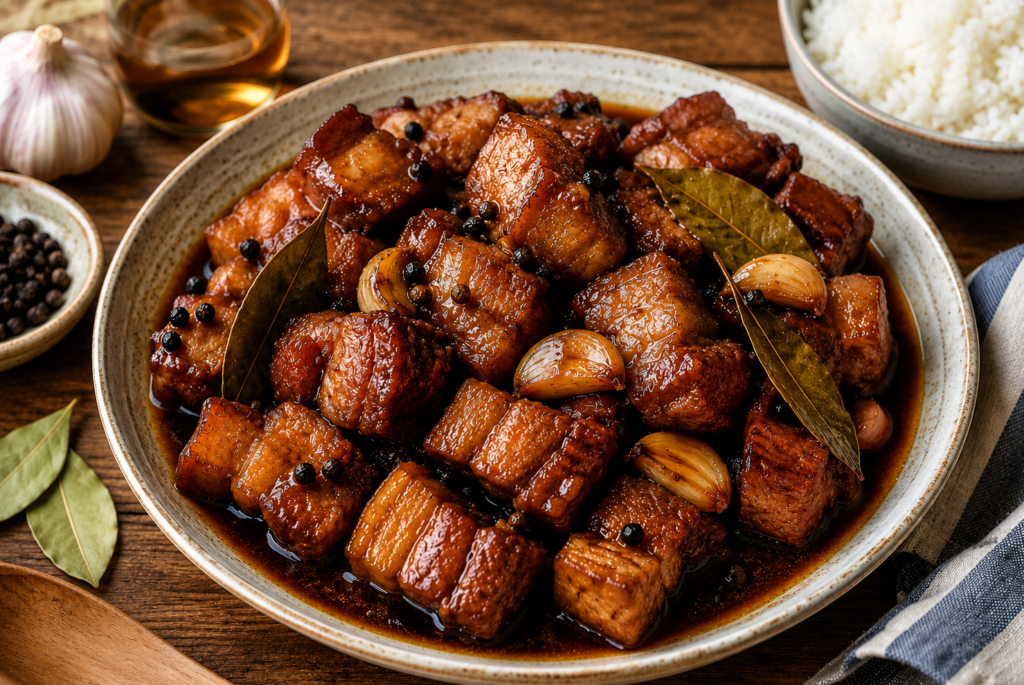
Why You Will Love The Filipino Pork Adobo Recipe
Finding a dinner that balances ease, affordability, and mind-blowing flavor is rare, but that is exactly what makes Filipino Pork Adobo a global favorite. Here is why this recipe will quickly become a permanent fixture in your home cooking rotation:
- Pantry-Staple Perfection: You don’t need a specialized grocery trip to make this authentic Asian dinner. Aside from the meat, it relies entirely on basic cupboard staples like soy sauce, white vinegar, garlic, and peppercorns.
- The Ultimate Meal Prep Masterpiece: Unlike most recipes that deteriorate in quality as they sit, adobo naturally undergoes an enzymatic breakdown in the fridge. The vinegar preserves and further tenderizes the meat while the savory fats meld into the sauce, making day-two and day-three leftovers taste like a high-end restaurant meal.
- Minimal Cleanup (One-Pot Wonder): No one wants a sink full of dishes on a weeknight. This one-pot Filipino meal takes care of the marinating, searing, and slow-simmering all within a single Dutch oven or heavy skillet.
- Foolproof for Beginners: Because this cooking method relies on low-and-slow braising, it is incredibly forgiving. It is virtually impossible to overcook or dry out the pork cuts, ensuring your pork chunks turn out melt-in-your-mouth tender every single time.
Ingredients For Filipino Pork Adobo
For the Pork Adobo
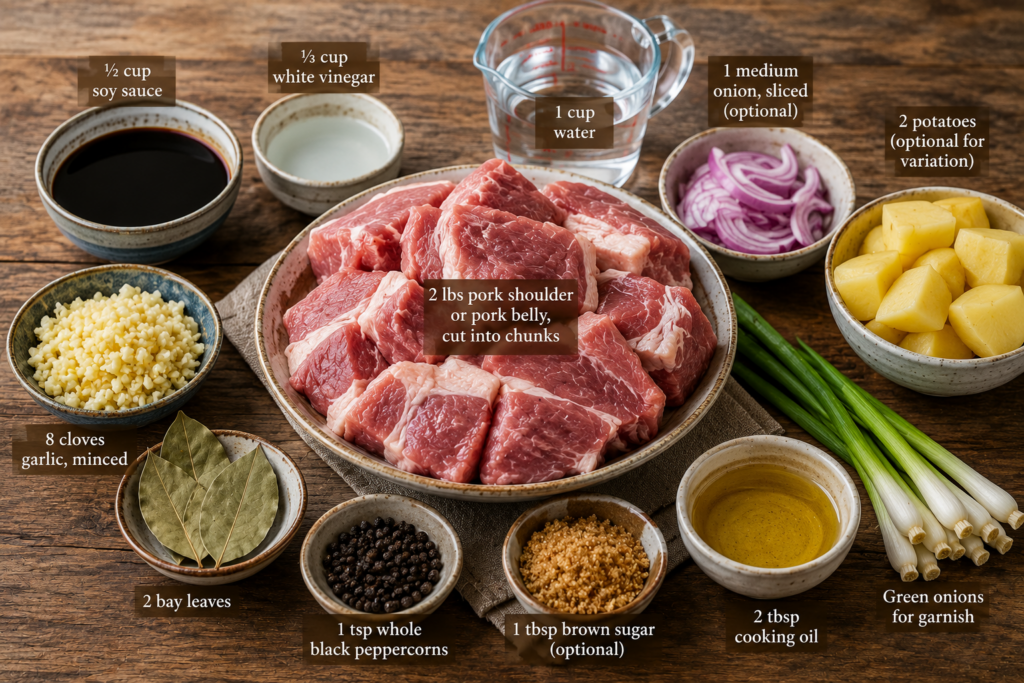
- 2 lbs pork shoulder or pork belly, cut into chunks
- ½ cup soy sauce
- ⅓ cup white vinegar
- 1 cup water
- 8 cloves garlic, minced
- 2 bay leaves
- 1 tsp whole black peppercorns
- 1 tbsp brown sugar (optional)
- 2 tbsp cooking oil
- 1 medium onion, sliced (optional)
- 2 potatoes (optional for variation)
- Green onions for garnish
Ingredient Notes
The beauty of Filipino Pork Adobo lies in its simplicity. Every ingredient plays an important role:
- Pork Shoulder: Ideal for tender yet juicy meat.
- Soy Sauce: Adds rich umami flavor and saltiness.
- Vinegar: The signature ingredient that gives adobo its tangy taste.
- Garlic: Essential for deep flavor.
- Bay Leaves: Adds subtle aroma.
- Peppercorns: Gives mild spice and warmth.
How to make Filipino Pork Adobo
Step 1: Marinate the Pork
In a large bowl, combine pork, soy sauce, and half of the garlic. Let it marinate for 30 minutes to 1 hour.
Tip: Longer marination gives deeper flavor.
Step 2: Sear the Pork
Heat oil in a large pot over medium heat. Add pork pieces and cook until lightly browned on all sides.
This step helps lock in flavor and improves texture.
Step 3: Add Aromatics
Add remaining garlic and onions. Cook for 2–3 minutes until fragrant.
Your kitchen will start smelling amazing at this stage.
Step 4: Add Liquids & Spices
Pour in:
- Vinegar
- Water
- Bay leaves
- Peppercorns
- Brown sugar
Important: Do not stir immediately after adding vinegar. Let it boil first for 2–3 minutes.
This is a traditional technique that helps mellow the acidity.
Step 5: Simmer
Reduce heat to low-medium. Cover and simmer for 40–50 minutes.
Stir occasionally after the vinegar has boiled.
Cook until pork becomes tender.
Step 6: Reduce the Sauce
Remove lid and simmer for another 10–15 minutes until sauce thickens.
Some people prefer extra sauce for rice, while others like it reduced and concentrated.
Step 7: Serve
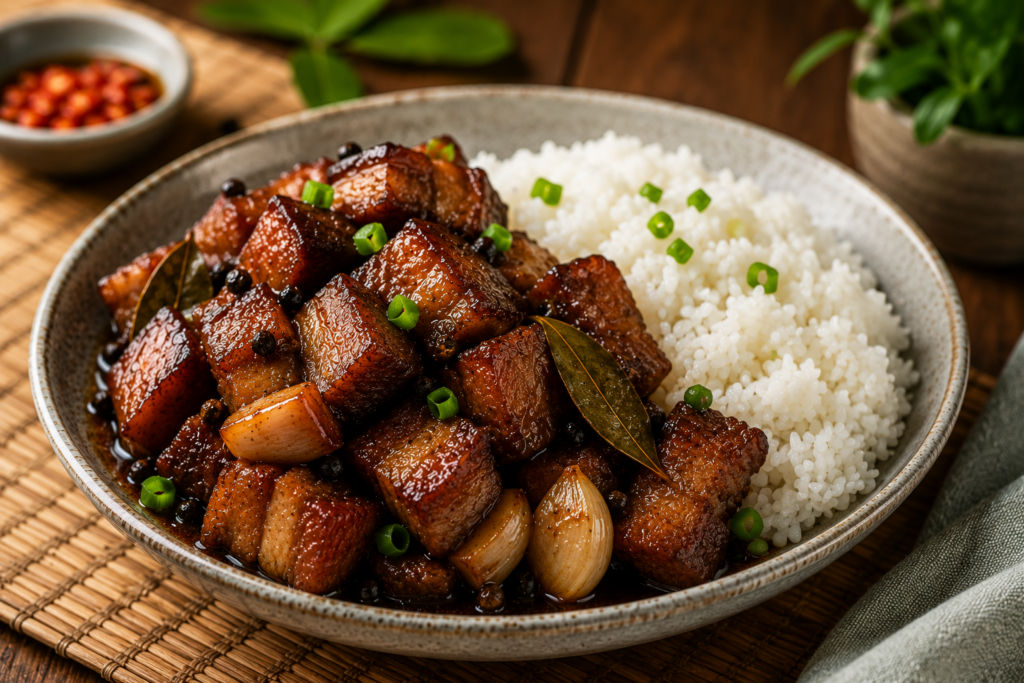
Garnish with chopped green onions and serve hot with steamed rice.
Enjoy your homemade Filipino Pork Adobo!
Substitutions for USA/Europe Grocery Stores
If you cannot find traditional ingredients, here are easy alternatives:
| Original Ingredient | Substitute |
|---|---|
| Cane Vinegar | White vinegar + pinch sugar |
| Pork Shoulder | Pork belly, chicken thighs |
| Soy Sauce | Tamari or low-sodium soy sauce |
| Peppercorns | Ground black pepper |
| Brown Sugar | Honey or maple syrup |
Storage Tips For Filipino Pork Adobo
Proper storage keeps your adobo fresh and flavorful.
- Cool completely before storing
- Store in airtight container
- Refrigerate for up to 4 days
- Freeze for up to 2 months
Pro Tip: Store with extra sauce to keep pork moist.
Reheating Tips For Filipino Pork Adobo
Stovetop (Best Method)
Reheat on low heat for 5–8 minutes.
Microwave
Heat in 30-second intervals until warm.
Frozen Adobo
Thaw overnight in fridge before reheating.
Add a splash of water if sauce becomes too thick
What to serve with Filipino Pork Adobo?
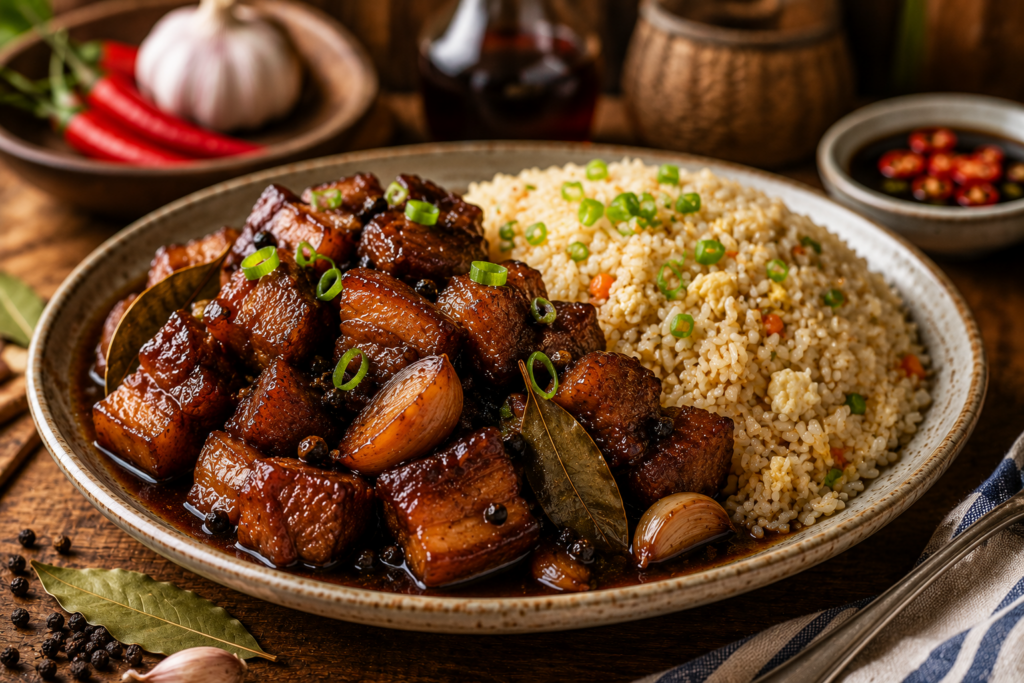
Because Filipino Pork Adobo features an incredibly rich, savory, and tangy sauce, it pairs best with side dishes that can either absorb that delicious gravy or offer a fresh, crisp contrast to cut through the richness of the pork belly.
Here are the best traditional and modern pairings to serve with your adobo:
Steaming Jasmine Rice: This is non-negotiable! Traditional adobo is always served over a generous bed of hot, fluffy white rice, which acts like a sponge for the garlic-soy reduction.
Filipino Garlic Fried Rice (Sinangag): If you have leftover rice from the day before, stir-fry it with plenty of toasted garlic. Serving pork adobo over garlic fried rice is the ultimate Filipino breakfast comfort food combination
- Cauliflower Rice: For a low-carb or keto-friendly alternative, lightly sautéed cauliflower rice provides the perfect neutral base without masking the complex flavors of the adobo sauce.
Pro-Tip for Serving: Always spoon extra adobo sauce directly over the rice right before serving. The contrast between the plain white rice and the punchy garlic-vinegar glaze is where the magic happens!
Final Thoughts: The True Heart of Filipino Cooking
At its core, Filipino Pork Adobo is much more than just a quick weeknight dinner—it is an introduction to the soul of Filipino home cooking. It beautifully demonstrates how a handful of humble kitchen staples can be transformed through patient, low-and-slow braising into a deeply layered, gourmet masterpiece.
The magic of this dish lies in its forgiveness and its evolution. Don’t be afraid to tweak the ratios to make it your own; add a bit more vinegar if you love a sharp tang, or toss in an extra handful of garlic cloves just because. And remember: resist the urge to eat it all on night one! Let those leftovers sit in the fridge overnight, pull them out the next day, and watch how a simple dish turns into an absolute flavor explosion over a fresh bowl of hot rice.
Give this recipe a try, fill your kitchen with its unforgettable aroma, and experience the ultimate comfort food that has brought families together for generations.
Best Filipino Pork Adobo Recipe – Authentic, Savory & Tangy
Master the art of traditional Philippines cuisine with this foolproof, authentic Filipino Pork Adobo recipe. Featuring melt-in-your-mouth tender pork chunks simmered slowly in a rich, tangy marinade of soy sauce, vinegar, crushed garlic cloves, and whole black peppercorns, this savory one-pot meal reduces down to an incredibly glossy, deeply flavorful glaze. It is the ultimate comforting Asian pork dish to serve over a steaming bed of jasmine rice!
For the Pork Adobo
Nutrition Facts
Servings 6
- Amount Per Serving
- Calories 420kcal
- % Daily Value *
- Total Fat 30g47%
- Sodium 980mg41%
- Total Carbohydrate 7g3%
- Dietary Fiber 1g4%
- Sugars 3g
- Protein 28g57%
* Percent Daily Values are based on a 2,000 calorie diet. Your daily value may be higher or lower depending on your calorie needs.
Note
Expert Tips for Perfect Pork Adobo
Use Fatty Pork Cuts
Pork belly or shoulder gives the richest flavor.
Don’t Skip Vinegar
This is the heart of authentic adobo.
Cook Low and Slow
Slow cooking creates tender meat and deeper flavor.
Make It Ahead
Adobo tastes even better after resting overnight.