
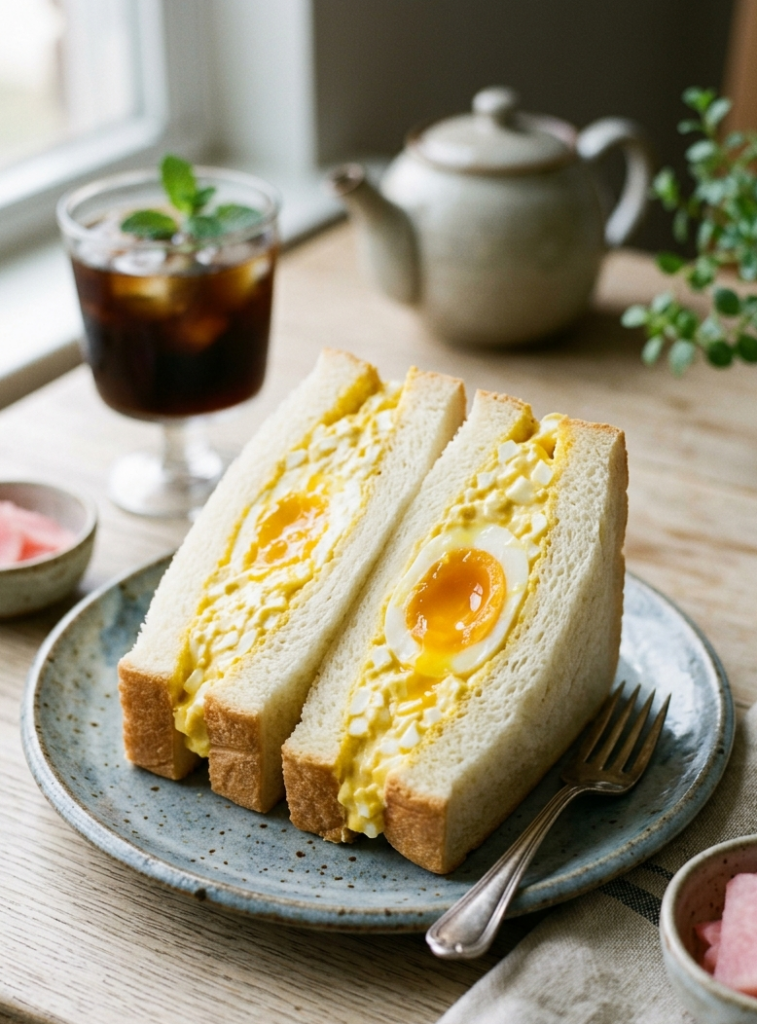

If you have ever stepped inside a Japanese convenience store (konbini) like 7-Eleven, Lawson, or FamilyMart, you know that their grab-and-go food section is legendary. Standing above almost everything else is the iconic Japanese Egg Sandwich, locally known as Tamago Sando (卵サンド).
Unlike standard Western egg salad sandwiches that can sometimes be heavy, dry, or over-flavored with celery and onions, the authentic Japanese version is a minimalist masterpiece. It features an incredibly rich, creamy, and velvety egg salad filling nestled between two pillowy-soft slices of crustless white milk bread.
In this comprehensive guide, we will break down the exact secrets to recreating this viral internet sensation right in your own kitchen. Whether you are craving a nostalgic travel memory or looking to expand your collection of easy Asian lunch ideas, this recipe delivers bakery-quality results every single time.
What is Japanese Egg Sandwich?
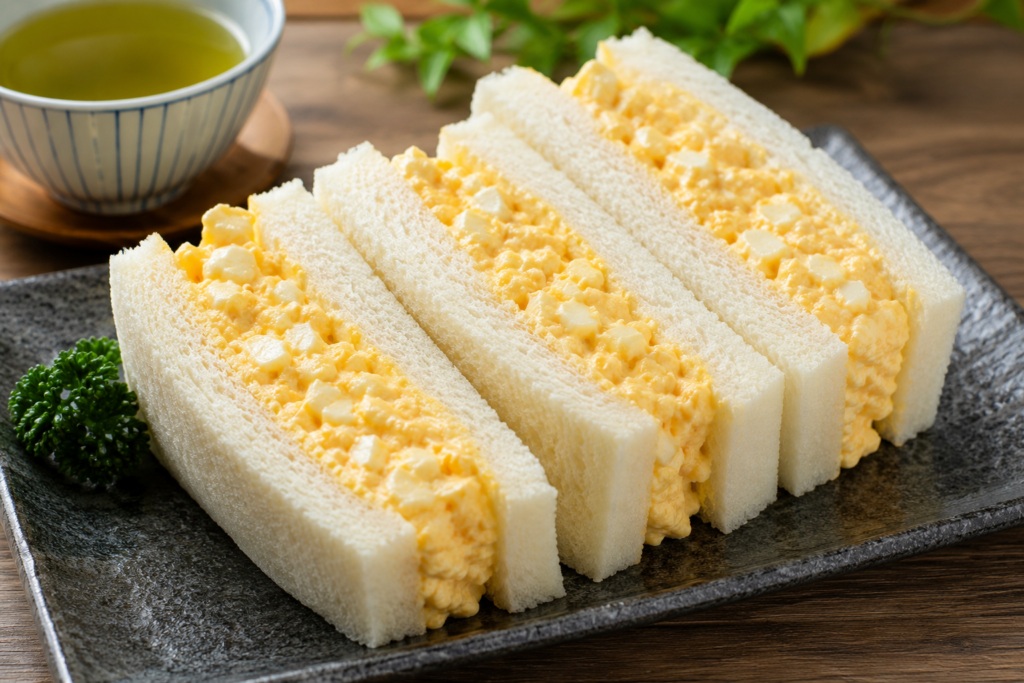
A Japanese Egg Sandwich, known natively as Tamago Sando (卵サンド), is a minimalist yet incredibly luxurious take on the classic egg salad sandwich.
While Western egg salad often includes crunchy textures like celery, onions, or relish, the Japanese version focuses entirely on a velvety, melt-in-your-mouth texture and rich umami flavor.
Ingredients Details For Japanese Egg Sandwich
Eggs
Eggs are the star ingredient. Use fresh large eggs for the creamiest filling.
Japanese Mayonnaise
Japanese mayo provides richer flavor and creamy texture compared to regular mayo.
Milk Bread
Soft fluffy bread is ideal for authentic Tamago Sando.
Mustard
Adds mild tanginess and extra depth.
Cream or Milk
Makes the egg mixture softer and smoother.
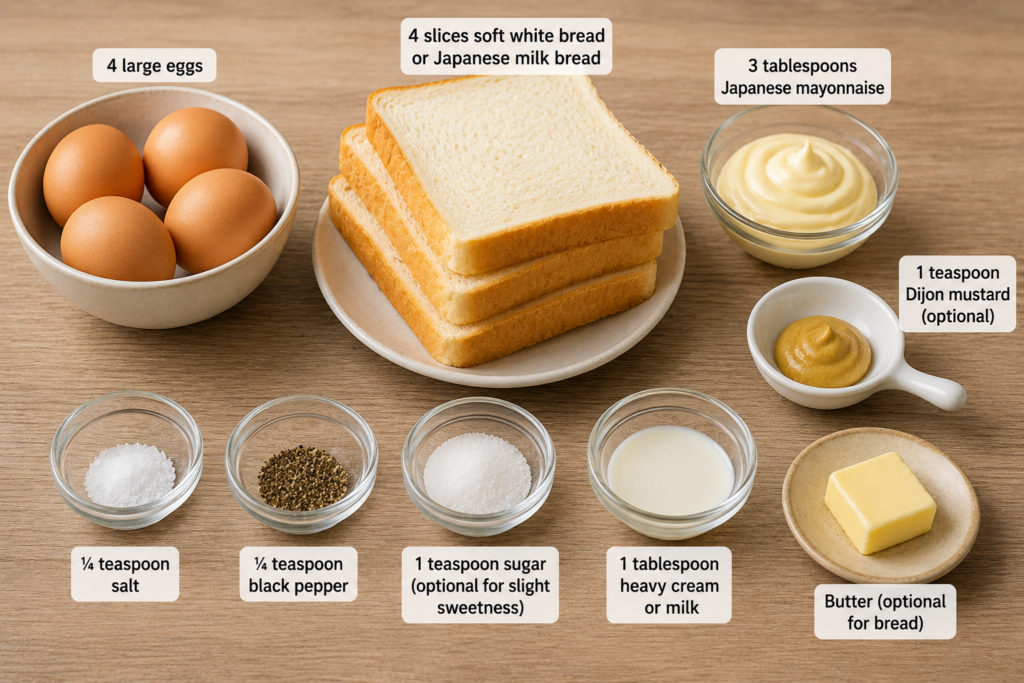
Main Ingredients
- 4 large eggs
- 4 slices soft white bread or Japanese milk bread
- 3 tablespoons Japanese mayonnaise
- 1 teaspoon Dijon mustard (optional)
- ¼ teaspoon salt
- ¼ teaspoon black pepper
- 1 teaspoon sugar (optional for slight sweetness)
- 1 tablespoon heavy cream or milk
- Butter (optional for bread)
How to make Japanese Egg Sandwich?
1.Perfectly Boil the Eggs: (12 minutes)
Bring a medium pot of water to a rolling boil over high heat. Ensure there is enough water to completely submerge the eggs. Gently lower your 4 large eggs into the boiling water using a slotted spoon to prevent cracking. Reduce the heat slightly to a medium-high simmer. Boil steadily for 11 to 12 minutes for a firm but creamy hard-boiled yolk.
2.Shock in an Ice Bath: (5 minutes.)
While the eggs are boiling, prepare a bowl filled with cold water and ice cubes. As soon as the timer goes off, immediately transfer the hot eggs into the ice bath. This stops the cooking process instantly and shrinks the egg slightly inside the shell, making them incredibly easy to peel. Leave them in the ice water for 5 minutes.
3.Separate and Mash:
Gently peel the cooled eggs. Slice them in half lengthwise. For the ultimate smooth texture, separate the firm yolks from the whites into two separate bowls. Add the Kewpie mayonnaise, salt, sugar, white pepper, and heavy cream directly to the yolks. Use a fork or a small whisk to mash the yolks until they form a completely uniform, smooth, bright yellow paste.
4.Make Egg Filling:
Add:
- Japanese mayonnaise
- Salt
- Pepper
- Sugar
- Mustard
- Cream or milk
Mix until creamy and smooth.
5: Prepare Bread
Trim crusts from bread slices for authentic Japanese style.
Butter bread lightly if desired.
6: Assemble Sandwich
Spread generous egg filling onto two bread slices.
Cover with remaining slices.
Press gently.
7: Slice and Serve
Cut sandwich diagonally or into rectangles.
Serve fresh or chilled.
What Makes It Distinctive?
Three core elements set it apart from standard sandwiches:
- Shokupan (Milk Bread): The sandwich is made with a thick-sliced, pillowy Japanese white bread. It is exceptionally soft, slightly sweet, and always served with the crusts completely cut off.
- Kewpie Mayonnaise: Instead of standard Western mayo, it uses Japanese Kewpie mayo. Made only with egg yolks and rice/apple vinegar, it gives the filling a deep golden color and a intensely savory, creamy finish.
- The Silk-Smooth Filling: The hard-boiled yolks are typically mashed into a fine paste with the mayo, cream, and a pinch of sugar before the chopped whites are folded back in. This results in an incredibly rich, uniform texture.
It is famously sold in Japanese convenience stores (konbini) like 7-Eleven and Lawson, where it has gained a massive global cult following among food lovers and travelers for being the ultimate budget-friendly comfort food.
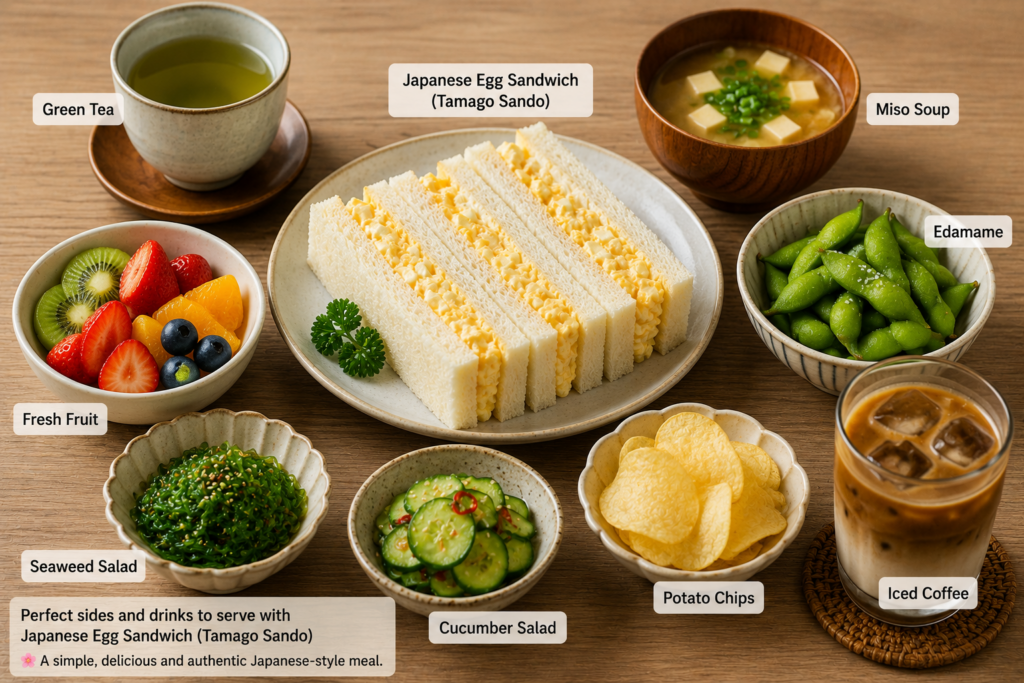
What to serve with Japanese Egg Sandwich
Because a Japanese Egg Sandwich (Tamago Sando) is incredibly rich, creamy, and soft, the best side dishes provide a crisp texture contrast, a bright pop of acidity, or a warm, comforting balance.
These pairings work exceptionally well for creating a complete café-style lunch menu:
Light Side Dishes
- Miso Soup — Warm and comforting, pairs perfectly with the creamy sandwich
- Edamame — Light, healthy, and protein-rich
- Seaweed Salad — Fresh and refreshing
- Fresh fruit salad — Adds sweetness and balance
- Cucumber salad — Crisp and refreshing
Crunchy Sides
- Potato chips
- Sweet potato fries
- Crispy roasted potatoes
- Japanese rice crackers
Breakfast Pairings
- Toasted croissants
- Mini pancakes
- Hard-boiled eggs
- Yogurt with honey
Drinks
- Green Tea — Classic Japanese pairing
- Iced coffee
- Matcha latte
- Fresh orange juice
- Milk tea
For a Complete Japanese-Style Meal
Serve your Tamago Sando with:
- Miso Soup
- Fresh fruit
- Green Tea
This creates a simple, authentic, and satisfying Japanese café-style meal
Why You Will Love This Recipe
- The Ultimate Texture Contrast: This sandwich redefines comfort food. The combination of cloud-like, pillowy shokupan (Japanese milk bread) paired with an ultra-creamy, velvety egg salad filling creates a luxurious texture that completely outshines standard, heavy Western egg salads.
- A Pure Umami Bomb: Thanks to the magic of genuine Kewpie mayonnaise (which is made strictly with egg yolks and savory rice vinegar), this filling delivers a deeply satisfying, savory depth of flavor with just a hint of natural sweetness.
- Minimal Effort, Maximum Reward: You don’t need advanced culinary skills or hours in the kitchen. With simple pantry staples and just 20 minutes of total time, you can recreate a viral, world-famous Tokyo convenience store (konbini) staple right in your own home.
- Perfect for Your Aesthetics & Meal Prep: Not only is this recipe incredibly delicious, but it is also highly photogenic (perfect for your Pinterest boards or Instagram feed!). Plus, the egg salad filling can be whipped up a day in advance, making your morning routine a breeze.
- Easily Adaptable: Don’t have an Asian grocery store nearby? No problem! This guide features quick, accessible substitutions for US and European supermarkets so you can achieve that authentic flavor using ingredients from your local grocery store.
The Secret to the Craving: Standard egg salad often relies on heavy additions like celery, onions, or mustard to create flavor. This Japanese version strips away the noise, focusing entirely on perfecting the cooking technique to let the rich, natural creaminess of the eggs shine through. One bite, and you’ll understand why travelers obsess over it!
Storage & Reheating Tips
How to Store Leftovers
The Japanese egg sandwich is best enjoyed fresh, but it can be stored for later. Wrap the assembled sandwich tightly in plastic wrap (saran wrap) before slicing it. This keeps the air out and prevents the soft milk bread from drying out in the fridge. Store it in an airtight container for up to 24 hours.
Substitutions for USA & Europe Grocery Stores
If you do not live near an Asian supermarket or a local Japanese bakery, don’t worry! You can easily adapt this recipe using common western grocery store staples without sacrificing too much authenticity.
- The Bread Alternative: Look for Brioche sandwich bread or high-quality, unsliced Texas Toast white bread. If you buy a whole, unsliced loaf of soft white sandwich bread, you can slice it yourself into thick, 3/4-inch slabs.
- The Kewpie Mayo Alternative: You can create an excellent DIY Kewpie mayonnaise substitute. Mix 3 tablespoons of standard American mayonnaise (like Best Foods or Hellmann’s) with 1/2 teaspoon of rice vinegar and a tiny pinch of MSG (monosodium glutamate) or dashi powder.
- White Pepper Alternative: If you do not have ground white pepper, finely ground black pepper or a dash of Dijon mustard can add a subtle kick, though it will add small dark specks to your beautiful yellow filling.
Conclusion
The beauty of the authentic Japanese Egg Sandwich lies in its absolute simplicity. It takes ordinary ingredients found in almost any kitchen and, through a few intentional techniques, transforms them into a luxurious, cloud-like comfort food. By separating the yolks to create a silky emulsion, using the umami-rich punch of Kewpie mayo, and choosing pillowy, crustless shokupan, you elevate a basic egg salad into a gourmet experience.
Japanese Egg Sandwich (Tamago Sando) Recipe
An authentic Japanese Egg Sandwich (Tamago Sando) featuring a velvety, silk-smooth egg salad filling packed with rich, umami-loaded Kewpie mayonnaise, nestled between two pillowy-soft slices of crustless white milk bread. This easy, 20-minute comfort food recipe brings the legendary taste of Tokyo's convenience stores straight to your kitchen!
Main Ingredients
Instructions
-
Master the "Dual-Texture" Egg Prep
To get that exact, luxurious texture found in high-end Tokyo cafés, don’t just mash everything together in one go.
-
The Secret: Separate your hard-boiled yolks from the whites. Whisk the yolks with the Kewpie mayo, cream, and seasonings first until it forms a perfectly smooth, velvety paste.
-
The Finish: Finely mince the whites with a sharp knife and gently fold them into the yolk cream. This ensures you get maximum silkiness with just the right amount of delicate bite.
-
-
Never Skip the Butter Barrier
Egg salad naturally contains moisture from the mayonnaise and egg whites. If you spread it directly onto ultra-soft shokupan (milk bread), the bread will absorb that moisture and turn soggy within minutes.
-
The Fix: Always spread a thin, even layer of softened, unsalted butter on the inside of both slices of bread before adding the filling. The fat in the butter acts as a waterproof shield, keeping your bread light and pillowy-soft.
-
-
Always Use Room Temperature Bread
Never use cold or toasted bread for an authentic Tamago Sando. The magic of this dish relies entirely on the bread being at room temperature so it retains its cloud-like, stretchy, and melt-in-your-mouth properties. If your shokupan loaf was stored in the fridge, let the slices warm up on the counter before assembling
-
How to Get a Flawless, Photogenic Cut
To get those perfectly clean, sharp edges that make your sandwich look "Pinterest-worthy," you need to handle the slicing stage with care.
-
The Fix: Wrap the assembled sandwich tightly in plastic wrap (saran wrap) and let it chill in the fridge for 10 minutes before cutting. Use a very sharp serrated bread knife and saw gently without pressing down hard. Crucial tip: Wipe the knife blade completely clean with a damp paper towel between every single cut to prevent yellow streaks on your white bread!
-
Nutrition Facts
Servings 2
- Amount Per Serving
- Calories 320kcal
- % Daily Value *
- Total Fat 20g31%
- Saturated Fat 6g30%
- Cholesterol 370mg124%
- Sodium 390mg17%
- Total Carbohydrate 22g8%
- Dietary Fiber 1g4%
- Sugars 3g
- Protein 14g29%
* Percent Daily Values are based on a 2,000 calorie diet. Your daily value may be higher or lower depending on your calorie needs.
Note
Use Soft Bread
The softer the bread, the more authentic the sandwich tastes.
Use Kewpie Mayo
This creates signature Japanese flavor.
Don’t Overmix
Keep some texture in eggs for better bite.
Chill Before Serving
Cold sandwiches taste more authentic.