
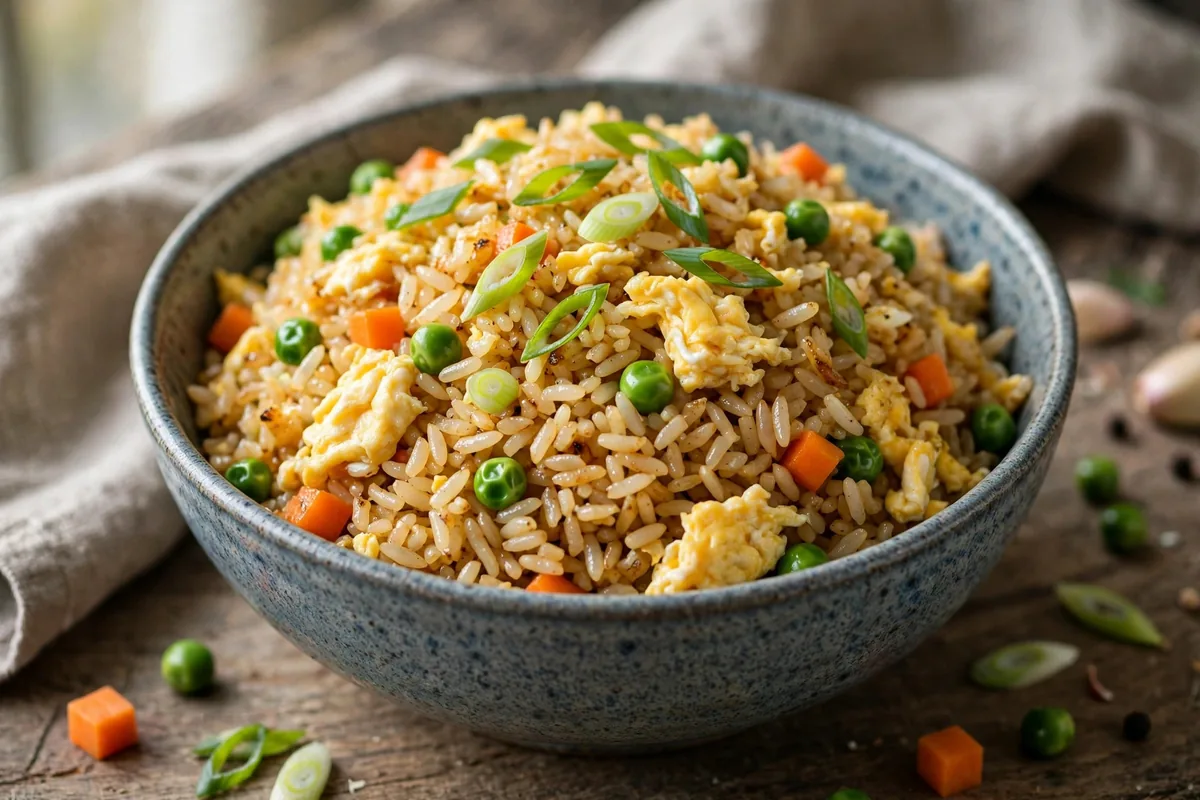
If you have leftover rice in the fridge, dinner is already halfway done. This easy egg fried rice takes about 20 minutes, uses simple pantry ingredients, and tastes fresher than most takeout versions because you control the oil, salt, and cooking time. The eggs are cooked first until just set, then folded back in at the end, so they stay soft and distinct, while the rice fries in a hot wok until lightly crisped at the edges. Serve it on its own, or alongside a stir-fry for a fuller meal.
What is egg fried rice?
Fried rice is a long-established Chinese dish, and it has always been a practical one: it turns cooked rice left over from another meal into something new instead of letting it go to waste. Versions of it are now common in home kitchens and restaurants around the world, with many local variations. This version stays close to the simple, classic idea — rice, egg, scallions (spring onions), garlic, and soy sauce — which keeps the chopping short and the flavor clear.
Why you’ll love this recipe
- Tastes fresher than most takeout versions because you control the oil, salt, and cooking time.
- Ready in about 20 minutes with simple pantry ingredients. If you have leftover rice in the fridge, dinner is already halfway done.
- Soft, distinct eggs — the eggs are cooked first until just set, then folded back in at the end, while the rice fries in a hot wok until lightly crisped at the edges.
Ingredients you’ll need
Use cold, cooked rice. Freshly cooked, still-steaming rice is too soft and wet, and it tends to clump and turn mushy in the wok. Rice that has been cooked, cooled, and refrigerated — ideally overnight — is drier and firmer, so the grains stay separate and fry properly.
Exact quantities are also given in the recipe card at the end of this article.
- Rice: 4 cups (about 600 g) cold cooked jasmine or long-grain rice, preferably day-old.
- Eggs: 3 large eggs, lightly beaten with a pinch of salt.
- Aromatics and vegetables: 3 scallions, thinly sliced, whites and greens kept separate; 2 garlic cloves, finely minced; 1 teaspoon (about 5 g) fresh ginger, grated (optional); 1 cup (about 150 g) frozen peas and carrots.
- Seasoning: 3 tablespoons (45 ml) neutral oil, such as vegetable or sunflower oil, divided; 2 tablespoons (30 ml) light soy sauce; 1 teaspoon (5 ml) toasted sesame oil; 1/2 teaspoon ground white pepper, or black pepper to taste.
- To serve: extra sliced scallion greens and sesame seeds (optional).
- Substitutions: use tamari or certified gluten-free soy sauce for a gluten-free version; swap the peas and carrots for sweetcorn, diced peppers, edamame, or mushrooms, keeping the total amount roughly the same so the rice fries rather than steams.
How to make egg fried rice
Step 1: Prepare the rice
Break up any clumps in the cold rice gently with your fingers or a fork, so it heats evenly. Measure everything and keep it beside the stove before you start — wok cooking moves fast.
Step 2: Scramble the eggs
Heat 1 tablespoon of oil in a large wok or large nonstick skillet over medium-high heat. Add the beaten eggs, let them sit for a few seconds, then stir gently until just set but still soft, about 1 to 2 minutes. Remove them to a plate at once; they will go back into the wok later, so do not cook them until dry.
Step 3: Cook the aromatics and vegetables
Add the remaining 2 tablespoons of oil to the same wok over medium-high heat. Add the scallion whites, garlic, and ginger, and stir for about 30 seconds until fragrant. Do not let the garlic brown, or it will taste bitter. Add the peas and carrots and stir-fry for 1 to 2 minutes, until heated through.
Step 4: Fry the rice
Add the cold rice, spread it out, and toss it so every grain is coated in oil. Fry for 4 to 5 minutes, stirring every 20 to 30 seconds, until hot throughout with some grains lightly golden at the edges. If the rice sticks, add a teaspoon more oil rather than water — water makes fried rice soggy.
Step 5: Season and finish
Pour the soy sauce around the edge of the wok, rather than onto the middle of the rice, and toss well. Add the sesame oil and white pepper, then return the eggs, breaking them into bite-sized pieces. Fold in the scallion greens, taste, adjust if needed, and serve immediately.
Tips for the best egg fried rice
- Use a large pan, and do not crowd it. If the wok is too full, the rice steams instead of frying. If doubling the recipe, cook it in two batches.
- Soggy rice? The usual causes are freshly cooked rice, too much sauce, or a pan that was not hot enough. Use cold day-old rice, measure the soy sauce, and let the wok get properly hot first.
- Bland rice? Taste before serving: a little more soy sauce adds salt and depth, sesame oil adds aroma, and white pepper adds gentle warmth.
- Rubbery eggs? Cook them separately, take them out while still soft, and fold them back in only at the end.
Why cold, day-old rice works better
Freshly cooked rice is full of surface moisture. In a hot wok that moisture turns to steam, the grains stick together, and the result is soft and clumpy. As cooked rice cools and sits in the fridge, the grains firm up and dry on the surface, so they can be tossed in hot oil without breaking down. If you have no day-old rice, spread freshly cooked rice thinly on a tray, cool it quickly, and refrigerate it until cold and firm. Do not leave cooked rice sitting at room temperature while you wait — cool it quickly and refrigerate it promptly.
Substitutions and variations
- Different rice: jasmine or long-grain rice both work well; brown rice is chewier and needs a little longer in the wok.
- Gluten-free: use tamari or certified gluten-free soy sauce, and check other sauces and toppings.
- Different vegetables: swap the peas and carrots for sweetcorn, diced peppers, edamame, or mushrooms, keeping the total amount roughly the same so the rice fries rather than steams.
- Vegetarian: as written, this recipe is vegetarian, with egg as the protein.
- Vegan option: leave out the eggs and cook 200 g of crumbled firm tofu first, with a pinch of turmeric for color if you like, until lightly golden, then fold it back in at the end in place of the egg.
- Add protein: add about 200–300 g of cooked chicken, shrimp, or tofu, cooked first and folded back in with the eggs at the end.
- Lower salt: use low-sodium soy sauce and taste before adding more.
What to serve with egg fried rice
This egg fried rice works as a simple weeknight side or a light main. Serve it on its own, or alongside a stir-fry for a fuller meal.
Storage, freezing, and reheating
Egg fried rice is best eaten fresh, while the rice is still lightly crisp and the eggs are soft. If you have leftovers, cool them quickly, put them in an airtight container, and refrigerate promptly. Use refrigerated leftovers within 24 hours, and reheat only once, until steaming hot all the way through, stirring well. Do not reheat fried rice more than once, and do not leave reheated rice standing at room temperature. Freezing is possible if you cool the rice quickly and freeze it in a single portion, but the texture will be softer after thawing; thaw overnight in the fridge, reheat once until steaming hot, and eat promptly.
Food safety: handling cooked rice
Cool cooked rice quickly after cooking, and refrigerate it promptly. Do not leave it at room temperature for long periods. Store it in a clean, covered container in the fridge. When reheating fried rice, reheat it only once, and heat it until it is steaming hot all the way through, stirring well so there are no cold spots. If rice has been left out for a long time, or you are unsure how long it has been stored, it is safer to throw it away than to use it.
Final thoughts
This recipe rewards a little preparation and a hot pan, and then gets out of its own way. Keep the rice cold, keep the pan hot, cook the eggs gently, and season to taste at the end — and you will have egg fried rice that is genuinely better than most takeout, for a fraction of the cost. If you try it, leave a rating and a comment to let us know how it turned out and what you served it with.

Leave a review