
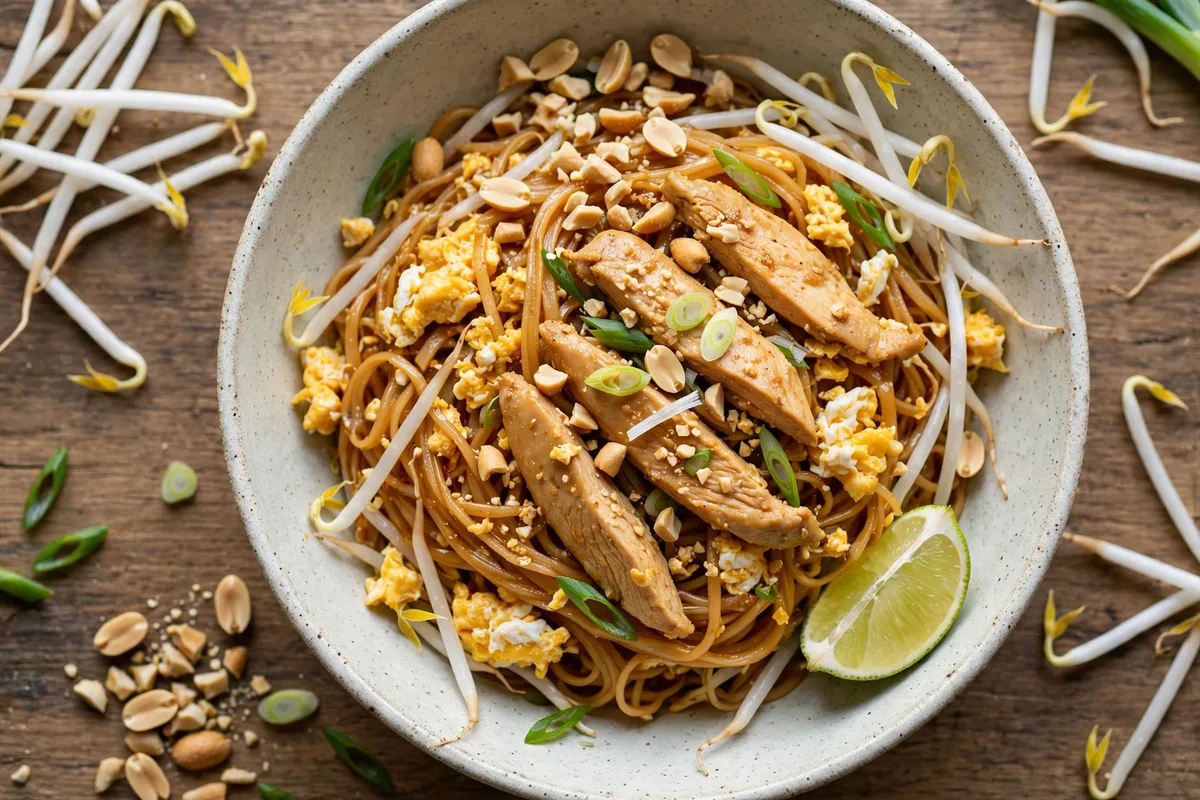
If you love Thai takeout, this easy chicken pad Thai recipe at home is a good place to start. It has soft rice noodles, tender chicken, a tangy-sweet pad Thai sauce, crunchy peanuts, and fresh lime — all cooked in one wok in about half an hour.
The sauce can be mixed and the noodles soaked while the chicken cooks. You need only a large wok or skillet.
What is pad Thai?
Pad Thai is one of Thailand’s best-known noodle dishes: thin rice noodles tossed in a sauce balancing sweet, sour, and salty flavors, usually with tamarind, sugar, and fish sauce. Chicken, egg, bean sprouts, scallions (spring onions), and peanuts are common additions, with lime wedges on the side.
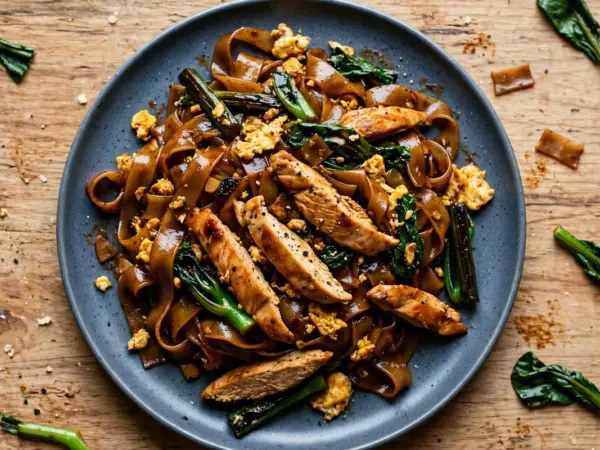
It differs from pad see ew, which uses wide, flat rice noodles, a darker soy-based sauce, and Chinese broccoli.
Why you’ll love this recipe
- Takeout flavor at home. Tamarind sauce, peanuts, and lime give the familiar balance without a delivery wait.
- Fast once cooking starts. Soaking and sauce-mixing take most of the time; the wok work is quick.
- Easy to adjust. Make it milder or spicier, add more vegetables, or swap the protein.
- A complete one-pan meal. Noodles, chicken, egg, and vegetables come together in the same wok.
Ingredients you’ll need
Use thin, flat rice noodles, sometimes labeled pad Thai noodles or rice sticks. Do not over-soak them: they should be pliable but still slightly firm, because they finish cooking in the wok. Fully soft noodles turn mushy later.
- For the chicken: 1 lb (450 g) boneless, skinless chicken breasts or thighs, thinly sliced; 1 tablespoon (15 ml) soy sauce; 1 teaspoon (5 ml) sesame oil, optional.
- For the pad Thai sauce: 3 tablespoons (45 ml) tamarind paste; 3 tablespoons (45 ml) fish sauce; 2 tablespoons (30 g) palm sugar or brown sugar; 1 tablespoon (15 ml) rice vinegar; 1 tablespoon (15 ml) soy sauce; 1 teaspoon (5 g) chili flakes, or to taste, optional.
- For the stir-fry: 8 oz (225 g) dried thin rice noodles; 2 tablespoons (30 ml) neutral oil, such as vegetable or sunflower oil, divided; 2 large eggs, lightly beaten; 3 cloves garlic, finely minced; 1 small shallot, thinly sliced, or 1/4 small onion; 2 cups (about 150 g) bean sprouts, divided; 4 scallions, cut into 2-inch (5 cm) pieces; 1/2 cup (75 g) roasted unsalted peanuts, roughly chopped, divided; 1 lime, cut into wedges, to serve; fresh cilantro (coriander) leaves, to serve, optional.
How to make chicken pad Thai
Step 1: Soak the noodles
Cover the rice noodles with warm, not boiling, water. Soak for 8 to 10 minutes, until pliable but still slightly firm. Drain well and set aside. Do not leave them soaking, or they will over-soften.
Step 2: Mix the sauce
Whisk the tamarind paste, fish sauce, palm or brown sugar, rice vinegar, soy sauce, and chili flakes if using, until the sugar dissolves. It should taste tangy, sweet, and salty at once.
Step 3: Cook the chicken
Heat 1 tablespoon of oil in a large wok or skillet over medium-high heat. Add the chicken in a single layer and cook for 3 to 4 minutes, stirring occasionally, until cooked through. Chicken must reach 165°F (74°C) throughout, with no pink meat. Remove to a clean plate.
Step 4: Cook the eggs
Add a little more oil if needed. Pour in the beaten eggs and stir gently until just set, about 1 minute. Eggs must be cooked until set, not left runny. Break the egg into pieces and remove to the plate with the chicken.
Step 5: Cook the aromatics
Heat the remaining oil over medium-high heat. Cook the garlic and shallot for about 30 seconds until fragrant, taking care not to burn the garlic.
Step 6: Toss everything together
Add the drained noodles and the sauce. Toss constantly for 2 to 3 minutes, using tongs, until the noodles are tender and have absorbed most of the sauce. If they seem dry or stiff, add water 1 tablespoon at a time. Return the chicken and egg, add half the bean sprouts, the scallions, and half the peanuts, and toss for 1 minute more until heated through.
Step 7: Serve
Divide between bowls. Top with the remaining bean sprouts and peanuts, coriander if using, and lime wedges. Serve immediately, while the noodles are still glossy and warm.
Tips for the best chicken pad Thai
- Do not over-soak the noodles. Slightly firm noodles finish in the sauce; fully soft noodles break apart.
- Keep the wok at medium-high heat. Very high heat can burn the garlic and sauce before the noodles are tender.
- Toss with tongs. Lift the noodles so the sauce coats them evenly without breaking them.
- Taste before serving. Add lime, sugar, or fish sauce a little at a time.
- Work in order. Have everything ready before you start, because the final toss moves fast.
Substitutions and variations
- Gluten-free: Use tamari or certified gluten-free soy sauce, and check the fish sauce and noodles.
- No tamarind: Use 2 tablespoons lime juice, 1 tablespoon rice vinegar, and 1 extra teaspoon of sugar. The result will be lighter and less earthy.
- Vegetarian: Replace the chicken with pressed extra-firm tofu, cubed and pan-fried until golden, and use soy sauce in place of fish sauce. Leave the egg out for a vegan version.
- Less spicy: Leave out the chili flakes and serve chili on the side.
- More vegetables: Add shredded carrot, sliced peppers, or shredded cabbage with the bean sprouts, keeping the total modest.
- Different protein: Shrimp, cooked briefly until pink and opaque, or thinly sliced pork can replace the chicken. Cook any raw meat or seafood fully first.
What to serve with chicken pad Thai
Pad Thai is a complete meal on its own. Serve it with lime wedges, extra chopped peanuts, and bean sprouts on top, as written. For a fuller spread, a simple cucumber salad adds freshness without competing with the sauce. Egg fried rice is a useful contrast for a larger meal, but keep portions small if serving two main dishes together.
Storage, freezing, and reheating
- Refrigerate: Cool leftovers within 2 hours and store in an airtight container for up to 3 days.
- Freeze: Freezing is not recommended. Cooked rice noodles soften after thawing, and bean sprouts go limp.
- Reheat: Warm in a skillet over medium heat with a splash of water, tossing gently, until steaming hot throughout. Do not reheat more than once, and do not leave cooked chicken or noodles at room temperature for more than 2 hours.
Final thoughts
Pad Thai rewards a little preparation and a hot wok. Soak the noodles just enough, balance the sauce before you toss, and cook the chicken fully. Once you have made it once, adjust one thing at a time — more lime, more chili, or extra vegetables.
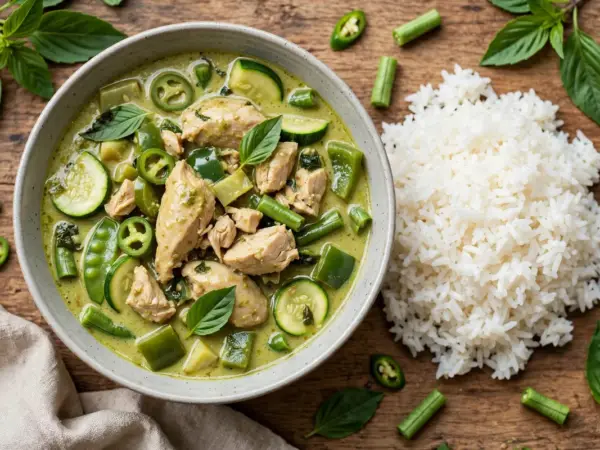
If you make it, leave a rating and tell us how you balanced the sauce. For a different Thai flavor next, try Thai green curry chicken: a coconut curry rather than a tangy noodle dish. For a Japanese weeknight option, try Chicken Teriyaki Rice Bowl.

Leave a review