
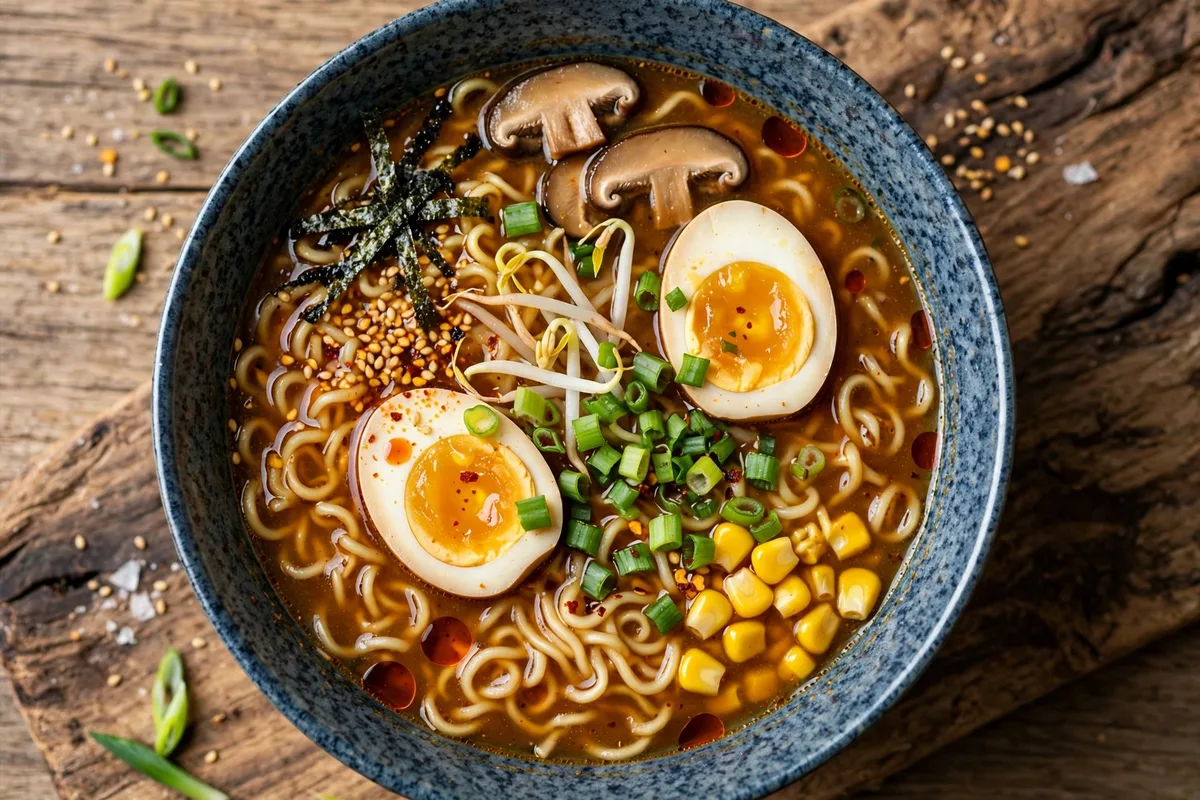
A bowl of miso ramen at home does not need a day of simmering stock or hard-to-find ingredients. This easy homemade miso ramen recipe builds a rich, savory miso broth in one pot, cooks the ramen noodles separately so they stay springy, and finishes with chicken, a soft egg, and simple toppings.
It is a good weeknight ramen: the broth comes together while the eggs cook, and the whole bowl is ready in about 40 minutes — warming and filling, and easy to adjust to what you already have.
What is miso ramen?
Miso ramen is a Japanese noodle soup in which ramen noodles are served in a broth seasoned with miso, the fermented soybean paste that gives savory depth and gentle sweetness. Soy sauce, sesame, garlic, and ginger add further flavor, and typical toppings include sliced meat or tofu, scallions (spring onions), sweetcorn, and a soft egg.
Miso ramen is not miso soup. Miso soup is a lighter, broth-only dish served in a small bowl alongside a meal, with additions such as tofu, seaweed, and scallion. Miso ramen is a complete main course: a large bowl of noodles in miso broth with filling toppings.
Why you’ll love this recipe
- Rich broth, quickly. The miso broth takes about 20 minutes, with no long simmering needed.
- Noodles that stay springy. The noodles are cooked separately, so they never go soft in the broth.
- Toppings you can swap. Chicken, tofu, sweetcorn, and a soft egg are all easy to change to what you have.
- A proper weeknight dinner. One pot for the broth, one pan for the noodles and eggs, and it is ready in 40 minutes.
Ingredients you’ll need
Exact quantities are also given in the recipe card at the end of this article.
- Chicken: 2 boneless, skinless chicken breasts, about 1 lb (450 g) total, sliced thinly. Thin slices cook quickly in the hot broth.
- Stock: 6 cups (1.4 liters) chicken stock, or vegetable stock for a meat-free version. Use a stock you like the taste of.
- Miso paste: 5 tablespoons (75 g) white or yellow miso paste. White miso is milder and slightly sweet; yellow miso is a little stronger.
- Soy sauce: 2 tablespoons (30 ml).
- Sesame oil: 1 tablespoon (15 ml) toasted sesame oil, for aroma.
- Garlic and ginger: 3 cloves garlic, finely minced, and 1 tablespoon (15 g) finely grated fresh ginger.
- Ramen noodles: 4 portions fresh or dried ramen noodles, about 12 oz (340 g) dried. Use plain noodles rather than instant noodles with a seasoning packet.
- Eggs: 4 large eggs, for soft eggs on top.
- Scallions: 4, thinly sliced, for topping.
- Sweetcorn: 1 cup (150 g) sweetcorn kernels, fresh, frozen, or canned and drained.
- Oil: 1 tablespoon neutral oil such as vegetable or sunflower oil.
- To finish (optional): Chili oil or chili flakes, toasted sesame seeds, and butter.
Substitutions in brief
- For a meat-free version, leave out the chicken and use vegetable stock with tofu.
- If you cannot find fresh ramen noodles, dried noodles work well.
- For a gluten-free version, use tamari or certified gluten-free soy sauce, and check that the noodles and miso are gluten-free.
How to make miso ramen
Step 1: Cook the soft eggs
Bring a small pan of water to a gentle boil and lower the eggs in. Cook for 6 to 7 minutes for a jammy yolk, then transfer to cold water and peel once cool enough to handle. Set aside. The whites should be fully set; cook longer for firm yolks, and use fresh eggs handled safely.
Step 2: Start the broth
Heat the neutral oil in a large pot over medium heat. Add the garlic and ginger and cook for 1 minute, stirring, until fragrant but not browned. Pour in the stock and bring to a gentle simmer.
Step 3: Cook the chicken
Add the sliced chicken to the simmering stock and cook for 5 to 6 minutes, stirring occasionally, until cooked through and reaching 165°F (74°C) throughout, with no pink meat remaining. If you are using tofu instead, add it now and warm through for 2 to 3 minutes.
Step 4: Season with miso
Turn the heat to low. Ladle a little hot broth into a small bowl, whisk in the miso paste until smooth, then stir it back into the pot. Add the soy sauce and sesame oil, taste, and adjust. Keep the broth hot but do not boil it hard once the miso is in. Add the sweetcorn and warm through for 2 minutes.
Step 5: Cook the noodles
Cook the noodles in a separate pan of boiling water according to the packet instructions, usually 2 to 3 minutes for fresh noodles and 3 to 4 minutes for dried. Drain well. Cooking them separately keeps the broth clear and the noodles springy.
Step 6: Assemble the bowls
Divide the noodles between four warmed bowls and ladle the steaming-hot broth and chicken over the noodles. Halve the soft eggs and place them cut side up. Top with scallions, plus chili oil, sesame seeds, or a small knob of butter if you like. Serve immediately while the broth is steaming hot.
Tips for the best miso ramen
- Whisk the miso separately first. Dissolving it in a ladle of hot broth avoids lumps in the pot.
- Do not boil the broth hard after adding miso. A gentle simmer keeps the flavor at its best.
- Cook the noodles separately. Noodles cooked in the broth turn soft and cloud it.
- Warm the bowls. Rinse the bowls with hot water and dry them before assembling, so the broth stays hot.
- Taste before serving. Miso pastes vary in saltiness, so adjust in small amounts.
Substitutions and variations
- Meat-free: Use vegetable stock and replace the chicken with 14 oz (400 g) firm tofu, sliced or cubed and warmed in the broth. Leave out the eggs for a fully plant-based bowl.
- Gluten-free: Use tamari or a certified gluten-free soy sauce, and check the miso and noodle labels, since some contain wheat.
- Spicier: Stir 1 to 2 teaspoons of chili oil, chili flakes, or gochujang into the broth, or serve chili oil at the table.
- Richer: Add a small knob of butter to each bowl just before serving.
- More vegetables: Add sliced mushrooms, baby spinach, or beansprouts to the broth for the last 2 to 3 minutes, keeping the total modest so the noodles stay the star.
- Different protein: Thinly sliced pork also works well; cook it until cooked through, with no pink meat remaining.
What to serve with miso ramen
Miso ramen is a complete meal on its own. For a small side, pickled cucumber or a simple salad adds freshness and crunch.
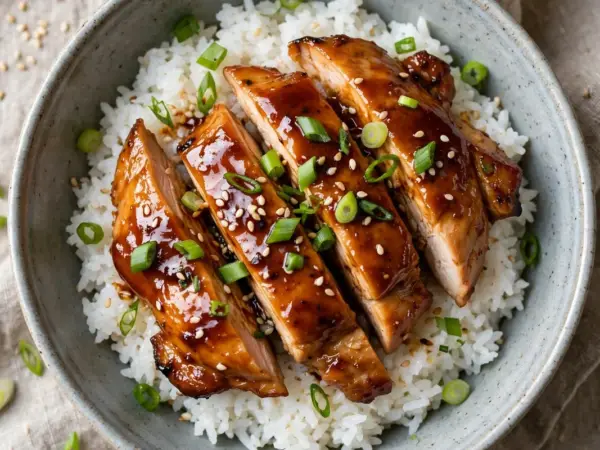
Gyoza or edamame make a good starter for a fuller Japanese meal. For another noodle night, try Japchae for a contrasting Korean noodle dish that is stir-fried rather than served in soup, or Chicken Teriyaki Rice Bowl for a similar weeknight format with rice instead of noodles. Chicken Pho is another warming noodle soup and a natural companion for colder evenings.
Storage, freezing, and reheating
- Refrigerate: Cool leftovers within 2 hours and keep in an airtight container in the refrigerator for up to 2 to 3 days. Where practical, store the noodles separately from the broth, since noodles left in broth go soft.
- Freeze: The broth without noodles or eggs freezes well for up to 2 months. Thaw overnight in the refrigerator. Do not freeze cooked noodles or soft eggs.
- Reheat: Warm the broth gently until steaming hot throughout, cook fresh noodles separately, and assemble a fresh bowl. Do not reheat more than once, and do not leave cooked chicken or broth at room temperature for more than 2 hours.
Final thoughts
Miso ramen is one of the most forgiving noodle soups to make at home: good stock, miso whisked in smoothly, noodles cooked separately, and toppings you like. Once you have made it once, the method is easy to repeat and adjust.
If you make it, leave a rating and tell us how you topped it — with chicken, tofu, extra chili, or a soft egg. And if you enjoy a warming noodle soup, try Chicken Pho next for a lighter, herb-filled contrast to this rich miso broth.



Leave a review