
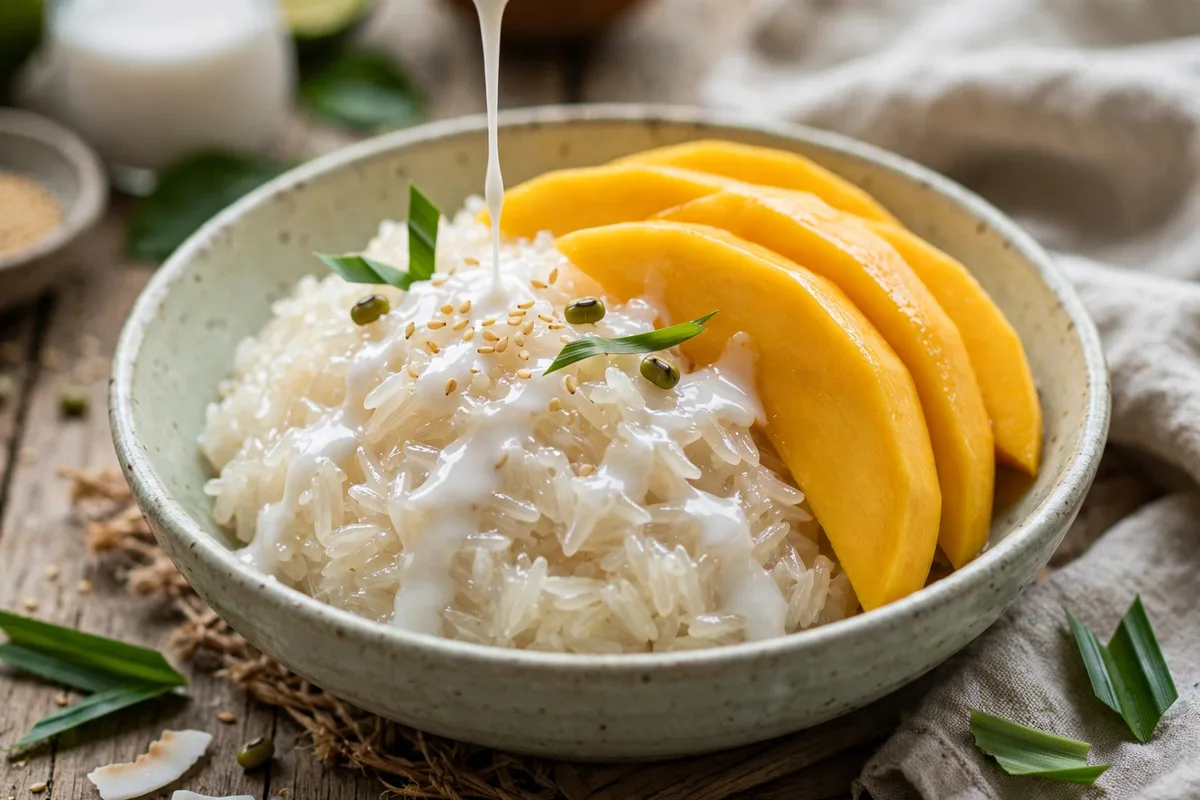
Mango sticky rice is a dessert that sounds simple and tastes far better than it sounds: warm, glossy coconut sticky rice, softly sweet and lightly salted, served with ripe mango and an extra drizzle of coconut cream. It needs only a handful of ingredients, and the contrast between warm rice and cool, fragrant mango does most of the work.
This version keeps the method approachable. The rice is soaked first, then steamed until tender, and folded with sweetened coconut milk while still warm so it absorbs the flavor. The mango is sliced just before serving, so it stays fresh against the rich rice.
What is mango sticky rice?
Mango sticky rice, known in Thai as khao niao mamuang, is a Thai dessert of glutinous rice — often called sticky rice — steamed until tender, then mixed with sweetened coconut milk and a pinch of salt, and served with ripe mango. The rice should be soft, glossy, and slightly chewy, not mushy, with a gentle coconut flavor and just enough sweetness to balance the fruit.
The mango matters just as much. It should be fully ripe, fragrant, and soft enough to slice cleanly. An underripe mango will taste sharp and firm against the warm rice, so choose fruit that yields gently when pressed and smells sweet at the stem end.
Mango sticky rice is not a savory rice dish. Egg Fried Rice, already published on this site, is a savory, wok-fried dish built around egg, soy sauce, and hot, separate grains. Mango sticky rice, by contrast, is a dessert: the rice is steamed, not fried, sweetened with coconut milk rather than seasoned with soy, and served with fruit instead of vegetables or meat.
Why you’ll love this recipe
- Simple ingredients, special result. Glutinous rice, coconut milk, sugar, salt, and ripe mango are all it needs.
- A warm-and-cool contrast. Warm coconut rice against cool, ripe mango makes each spoonful interesting.
- Easy to time for guests. The rice can be steamed ahead and kept warm, and the mango is sliced at the last minute.
- Naturally gluten-free and plant-based. It contains no wheat, egg, or dairy, as long as the coconut milk and toppings are checked for additives.
Ingredients you’ll need
Exact quantities are also given in the recipe card at the end of this article.
- Glutinous rice: 2 cups (400 g) Thai glutinous rice, also sold as sticky rice or sweet rice. Ordinary long-grain rice will not give the same soft, sticky texture.
- Coconut milk: 1 can (400 ml) full-fat coconut milk, well shaken. Reserve a few tablespoons for drizzling at serving.
- Sugar: 1/3 cup (65 g) granulated sugar, or to taste. The rice should taste gently sweet, not sugary.
- Salt: 1/2 teaspoon fine salt, plus a tiny pinch for the reserved coconut drizzle, if you like.
- Ripe mangoes: 2 large ripe mangoes, peeled and sliced. Choose fruit that is fragrant, soft, and sweet.
- Toasted mung beans or sesame (optional): 2 tablespoons toasted mung beans or toasted sesame seeds, for sprinkling.
- Pandan (optional): 1 pandan leaf, knotted, for steaming with the rice. It adds fragrance but can be left out.
How to make mango sticky rice
Step 1: Soak the rice
Rinse the glutinous rice in several changes of cold water until the water runs mostly clear. Cover it with plenty of cold water and leave it to soak for 2 hours at room temperature. That soaking time is included in the Prep time above. Longer soaking, up to overnight in the refrigerator, also works, but 2 hours is the minimum here. Drain thoroughly before steaming.
Step 2: Steam the rice
Line a steamer basket with a clean cloth or muslin, and spread the drained rice in an even layer. If using pandan, tuck the knotted leaf among the rice. Steam over boiling water for 25 to 30 minutes, turning once halfway through, until the grains are tender and translucent, with no hard center. Keep the water at a steady boil so the steam stays strong.
Step 3: Warm the coconut milk
While the rice steams, pour the coconut milk into a small saucepan, reserving about 3 tablespoons for drizzling later. Add the sugar and salt and warm over low heat, stirring, until dissolved. Do not boil the coconut milk hard, or it may split. Keep it warm until the rice is ready.
Step 4: Combine rice and coconut milk
Tip the hot, steamed rice into a large bowl and remove any pandan leaf. Pour over the warm sweetened coconut milk and fold gently until evenly coated. Cover and leave for 10 minutes, so the rice absorbs the coconut milk and turns glossy. Fold once more before serving.
Step 5: Prepare the mango
While the rice stands, peel the mangoes and slice the flesh away from the stone in neat slices or chunks. Work over a plate to catch any juice, and keep ripe mango at room temperature, so it is not fridge-cold against the warm rice.
Step 6: Serve
Divide the warm coconut sticky rice between four plates or bowls. Arrange the mango slices alongside or on top, drizzle with the reserved coconut milk, and sprinkle with toasted mung beans or sesame seeds if using. Serve while the rice is still warm and the mango is fresh.
Tips for the best mango sticky rice
- Use glutinous rice, not ordinary rice. The sticky texture comes from glutinous rice alone; long-grain or jasmine rice will cook up separate and will not hold the coconut milk in the same way.
- Do not skip the soak. Unsoaked glutinous rice steams unevenly and can stay hard in the middle. Two hours is the minimum; overnight soaking in the refrigerator is fine too.
- Steam, do not boil, the rice. Boiling makes it gluey. Steaming gives tender, separate-but-sticky grains that hold their shape.
- Fold, do not stir hard. Gentle folding keeps the grains intact. Vigorous stirring breaks them and turns the rice into a paste.
- Let the rice absorb before serving. Ten minutes covered after adding the coconut milk makes the rice glossy and lets the flavor settle.
- Choose ripe mango. If it is not yet ripe, leave it at room temperature for a day or two until it softens and smells sweet. An underripe mango will not balance the rich rice.
Substitutions and variations
- No steamer: A colander lined with cloth set over a pot of boiling water works, as long as the lid fits snugly and steam can reach the rice.
- Less sweet: Reduce the sugar to 1/4 cup (50 g) and taste after folding; add more only if the mango is not very sweet.
- Extra coconut flavor: Use coconut cream for the drizzle, or add a tablespoon to the warm coconut milk, for a richer finish.
- Different topping: Toasted sesame seeds, toasted coconut flakes, or crushed roasted peanuts all add crunch. Use peanuts only if there are no nut allergies to consider.
- No pandan: Leave it out. The dessert is still fragrant from the coconut milk and mango.
- Mango alternatives: Ripe peach slices can be served in a pinch, but the classic pairing is ripe fresh mango, and the flavor will be different.
What to serve with mango sticky rice
Mango sticky rice is a complete dessert on its own, usually served just as it is: warm rice, ripe mango, coconut drizzle, and a crunchy topping. A cup of jasmine tea or plain green tea is a good, light accompaniment, since it will not compete with the coconut and mango.
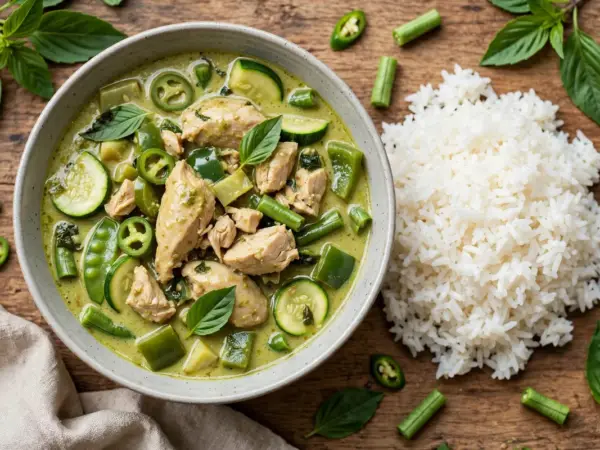
For a fuller Thai meal, it makes a natural sweet finish after a savory Thai main course. Thai Green Curry Chicken, already published on this site, pairs well before this dessert, since its warm, coconut-based curry leads naturally into the coconut rice that follows. Egg Fried Rice offers a useful contrast another night: a savory rice dish for the main course, with mango sticky rice as the sweet rice to finish a different meal.
Storage, freezing, and reheating
- Refrigerate promptly: Cool leftover coconut sticky rice within 2 hours and refrigerate promptly in an airtight container. Do not leave cooked sticky rice or coconut milk at room temperature for long periods. Eat within 1 to 2 days.
- Keep mango separate: Store leftover mango separately from the rice, covered, in the refrigerator, and eat it within 1 to 2 days. Do not reheat mango.
- Reheat gently: Reheat leftover sticky rice gently, covered, in the microwave or steamer, with a splash of water or coconut milk if dried out, until steaming hot throughout. Reheat only once. The texture will be softer than freshly made rice.
- Freeze: Not recommended. Cooked glutinous rice hardens after freezing and thawing, and the coconut milk can separate, so this dessert is best made fresh.
Final thoughts
Mango sticky rice earns its place as a favorite Thai dessert because it is simple and generous, and hard to get wrong once the rice is soaked and steamed properly. Warm coconut rice, ripe mango, and a little crunch on top are all it needs.
If you make it, leave a rating and tell us how you served it — with toasted mung beans, sesame seeds, or just mango and coconut drizzle. And if you enjoy this sweet, coconut-based finish, try it after Thai Green Curry Chicken for a full Thai meal.

Leave a review