
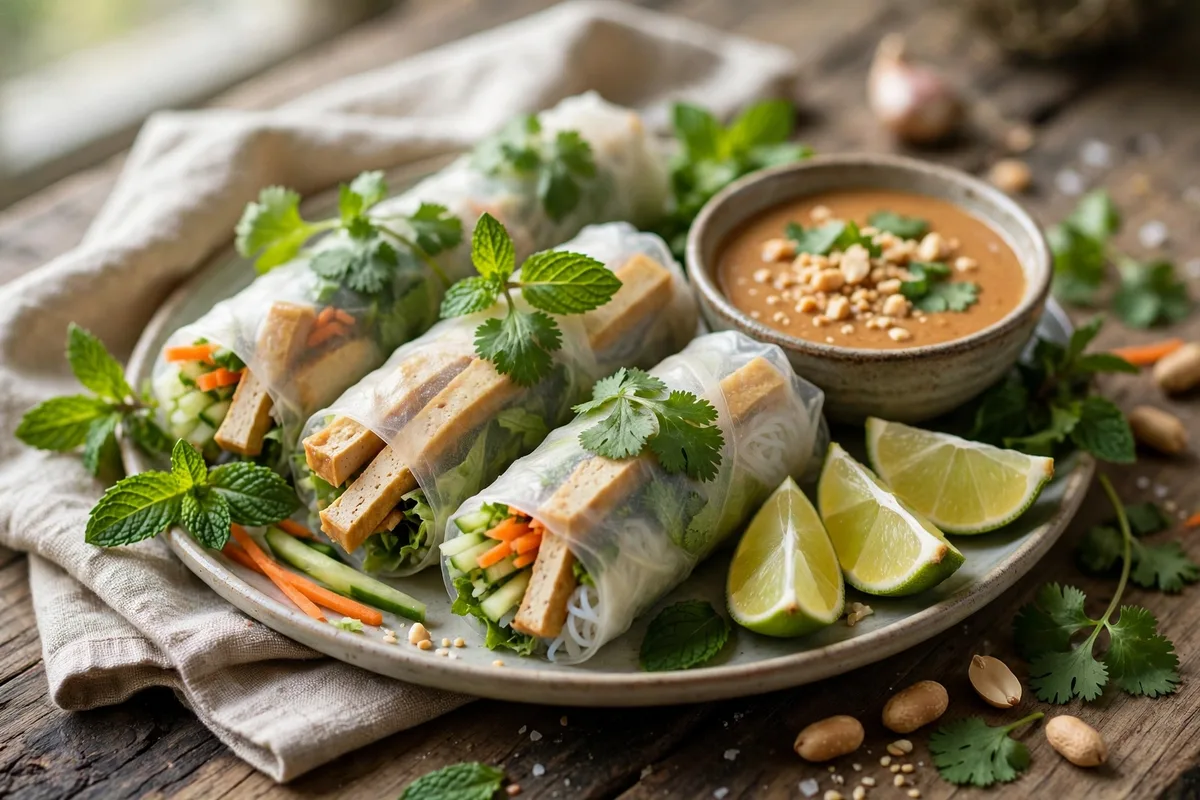
Vietnamese fresh spring rolls with peanut sauce are light, bright, and a little bit special, without any frying at all. Soft rice paper wraps around crisp vegetables, fresh herbs, and tender rice vermicelli, and each roll is dipped in a creamy, savory peanut dipping sauce. They make a refreshing start to a Vietnamese meal, or a light lunch on their own.
This version keeps everything approachable. The fillings are simple, the peanut sauce comes together in one small pan, and the rolling technique is forgiving once you have made the first roll or two. Make them just before serving, and set out plenty of sauce.
What are Vietnamese fresh spring rolls?
Vietnamese fresh spring rolls, known as goi cuon, are rice paper rolls filled with fresh vegetables, herbs, and rice vermicelli, sometimes with tofu, shrimp, or pork, served at room temperature or lightly chilled with a dipping sauce. Unlike fried spring rolls, the rice paper is not cooked after rolling: it is softened briefly in warm water, filled, and rolled while still pliable, so the finished roll is translucent, soft, and cool.
Fresh herbs such as mint, basil, and coriander give the rolls their fragrance, while lettuce, carrot, cucumber, and bean sprouts add crunch. The peanut dipping sauce ties it together, with peanut butter, hoisin, soy sauce, and lime giving a creamy, salty, slightly sweet contrast.
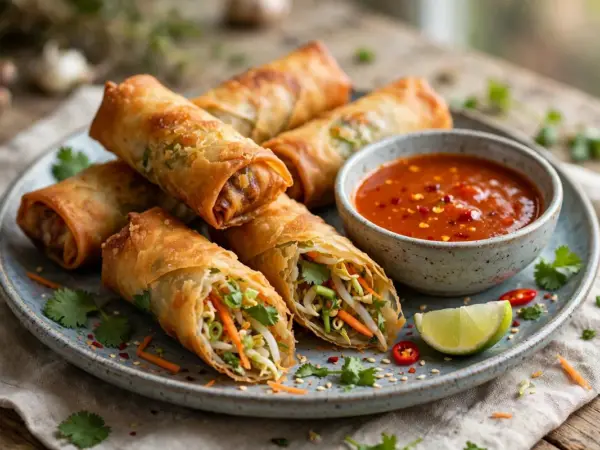
These rolls are not Crispy Vegetable Spring Rolls, the fried appetizer in this same final batch. Crispy rolls are wrapped in wheat wrappers and fried until golden and crunchy, with a sweet chili dip. Fresh rolls are the no-fry contrast: soft rice paper, fresh herbs, and peanut sauce, with no frying at all.
Why you’ll love this recipe
- No frying, no fuss. The rolls are assembled, not cooked, so there is no hot oil to clean up.
- Fresh and light. Crisp vegetables and fragrant herbs make these rolls refreshing, not heavy.
- Fun to make together. Rolling is easy to learn and enjoyable with family or friends.
- Easy to adjust. Swap vegetables or protein to suit what you have, and make the sauce as mild or spicy as you like.
Ingredients you’ll need
Exact quantities are also given in the recipe card at the end of this article.
- Rice paper wrappers: 12 round rice paper wrappers, about 8 1/2 inches (22 cm) across. Keep them dry until you are ready to roll.
- Rice vermicelli: 4 oz (115 g) dried thin rice vermicelli, cooked, drained, and cooled.
- Firm tofu: 7 oz (200 g) firm tofu, sliced into thin strips, lightly pan-fried or left plain.
- Lettuce: 8 small lettuce leaves, such as butter lettuce or romaine, torn to fit the wrappers.
- Carrot: 1 medium carrot, peeled and cut into thin matchsticks.
- Cucumber: 1/2 cucumber, cut into thin matchsticks.
- Bean sprouts: 1 cup (about 80 g) fresh bean sprouts, rinsed.
- Fresh herbs: A large handful each of fresh mint, Thai or sweet basil, and cilantro (coriander) leaves.
- Scallions (spring onions): 2 scallions, cut into thin strips, optional.
- Peanut butter: 1/3 cup (85 g) smooth peanut butter, for the dipping sauce.
- Hoisin sauce: 2 tablespoons (30 ml) hoisin sauce.
- Soy sauce: 1 tablespoon (15 ml) soy sauce.
- Lime: Juice of 1 lime, plus extra wedges to serve.
- Garlic and ginger: 1 clove garlic, finely minced, and 1 teaspoon finely grated fresh ginger.
- Water: 3 to 4 tablespoons (45 to 60 ml) warm water, to loosen the sauce.
- Chili (optional): 1 teaspoon chili sauce or a pinch of chili flakes, to taste.
- Peanut allergy warning: Do not serve the peanut sauce to anyone with a peanut allergy. A plain hoisin and lime dip, without peanut butter, is the non-peanut alternative.
Substitutions in brief
For a gluten-free version, use tamari or a certified gluten-free soy sauce and check the hoisin label. If you cannot find Thai basil, sweet basil works well. Cooked shrimp can replace the tofu, provided they are cooked until pink and opaque throughout.
How to make Vietnamese fresh spring rolls
Step 1: Prepare the fillings
Wash all fresh herbs and vegetables thoroughly under cold running water and pat dry. Cook the rice vermicelli according to the packet, drain, rinse with cold water, and set aside. If pan-frying the tofu, cook the strips in a little oil over medium heat for 2 to 3 minutes per side, until lightly golden. Arrange all fillings in separate piles on a clean board, so rolling is quick.
Step 2: Make the peanut dipping sauce
Put the peanut butter, hoisin sauce, soy sauce, lime juice, garlic, and ginger in a small saucepan over low heat. Warm gently for about 5 minutes, stirring, until smooth — do not let it boil hard. Stir in warm water, a tablespoon at a time, until thick but pourable. Taste and adjust with more lime juice, soy sauce, or chili. Keep the peanut sauce clearly separate from any non-peanut dip, and use clean spoons for each.
Step 3: Soften the rice paper
Fill a wide, shallow dish with warm — not hot — water. Dip one rice paper wrapper for about 10 to 15 seconds, until pliable but still slightly firm; it will continue to soften as you fill it. Lay it flat on a clean, damp surface. Do not soak it until completely limp, or it will tear.
Step 4: Fill the roll
Lay a lettuce leaf across the lower third of the wrapper, then add a small handful of vermicelli, a few strips of tofu, some carrot, cucumber, bean sprouts, and scallion if using. Finish with several mint, basil, and cilantro leaves on top, so they show through the roll. Do not overfill: a modest amount rolls far more neatly.
Step 5: Roll it up
Fold the bottom edge up and over the filling, then fold in the two sides, like an envelope. Roll firmly but gently away from you, keeping the filling snug, until sealed. Place seam-side down, and cover loosely with a damp cloth while you make the rest, so the rolls do not dry out or stick together.
Step 6: Serve
Arrange the rolls on a plate, cut in half on the diagonal if you like, so the fillings show. Serve immediately with the peanut dipping sauce, lime wedges, and any non-peanut dip on the side. Eat promptly, while the wrappers are still soft.
Tips for the best Vietnamese fresh spring rolls
- Work with clean hands and a clean surface. Wash your hands before handling wrappers and fillings, since the rolls are eaten without further cooking.
- Use warm, not hot, water. Hot water makes rice paper go limp and tear; warm water softens it gradually.
- Do not over-soak the wrappers. Ten to fifteen seconds is enough; a slightly firm wrapper finishes softening as you roll.
- Keep the rolls from sticking. Place finished rolls seam-side down with space between them, covered with a damp cloth.
- Prep everything first, and roll just before serving. Once the first wrapper is wet, the process moves quickly, and the rolls are best within an hour or two, while wrappers are soft and herbs are bright.
Substitutions and variations
- Gluten-free: Use tamari or a certified gluten-free soy sauce and check the hoisin label; rice paper and vermicelli are naturally gluten-free.
- With shrimp: Replace the tofu with cooked shrimp, halved lengthwise, placed cut-side out near the top of the roll so they show through.
- No peanut sauce: For guests with a peanut allergy, serve hoisin thinned with lime juice and warm water, in a separate bowl with its own spoon.
- More vegetables: Add shredded red cabbage, bell pepper, or thinly sliced mango, keeping the total filling modest so the rolls still seal.
- Spicier sauce: Stir extra chili into the peanut sauce, or serve sliced fresh chili on the side.
- Vegan: This recipe is vegan as written, provided your hoisin sauce contains no animal products — check the label.
What to serve with Vietnamese fresh spring rolls
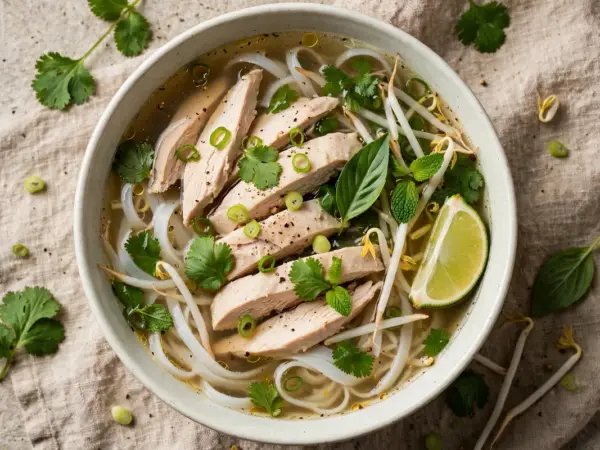
Fresh spring rolls are a light appetizer on their own, with plenty of peanut sauce and lime wedges. For a fuller Vietnamese meal, follow them with Chicken Pho, already published on this site, whose warm broth contrasts nicely with these cool rolls.
Crispy Vegetable Spring Rolls, the fried appetizer in this same final batch, make an interesting contrast another night: golden, crunchy, and hot, with a sweet chili dip instead of peanut sauce.
Storage, freezing, and reheating
- Refrigerate: Best eaten promptly, within an hour or two of rolling. If you must keep them, cover tightly with damp paper towels and plastic wrap and refrigerate for no more than a few hours, and no longer than one day. Wrappers firm up and herbs wilt with longer storage.
- Do not leave at room temperature for long periods. Keep rolls chilled until serving, and do not leave them out for more than 2 hours in total. Discard any left out longer.
- Freeze: Do not freeze fresh spring rolls. Rice paper turns tough and the fresh herbs and vegetables lose their texture on thawing.
- Reheat: Do not reheat fresh spring rolls. They are meant to be eaten fresh, and reheating makes wrappers tough and fillings soggy. Make only as many as you plan to eat.
Final thoughts
Vietnamese fresh spring rolls are worth making at home because they are simple, beautiful, and genuinely refreshing: soft rice paper, crisp vegetables, fragrant herbs, and a creamy peanut sauce that brings the plate together. The first roll may look untidy, but by the third or fourth you will have the rhythm, and even the untidy ones taste wonderful.
If you make them, set out plenty of sauce and lime — these rolls disappear quickly. And if you enjoy this fresh, no-fry style, try Crispy Vegetable Spring Rolls next for the hot, crunchy contrast, or Chicken Pho for a warm main course to follow.

Leave a review