
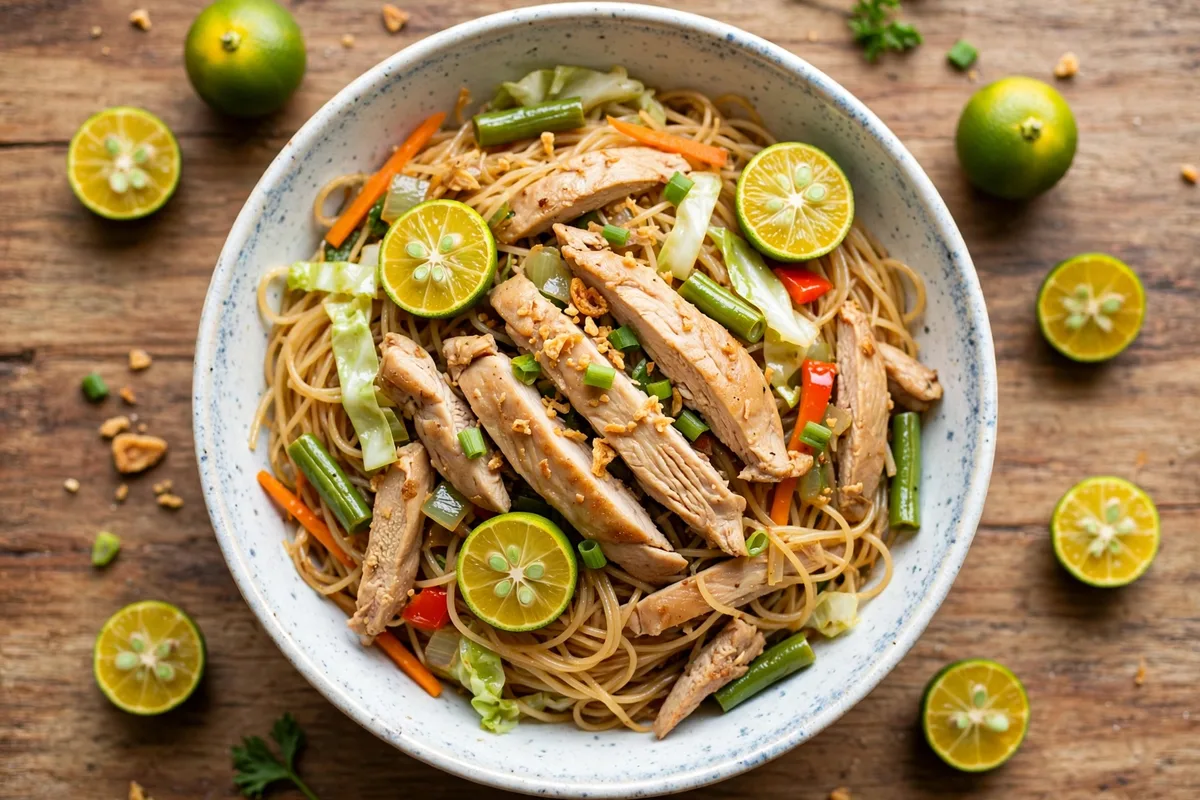
Pancit Bihon is the Filipino noodle dish at birthdays and family gatherings: light, savory rice vermicelli tossed with chicken, vegetables, and a soy-and-calamansi seasoning, with extra calamansi or lemon on the side. It is not heavy or saucy — the noodles drink up the broth, turning glossy and flavorful.
This easy version keeps everything in one pan: chicken and vegetables are stir-fried first, then the noodles go in with stock and seasonings to finish. Soaking the noodles briefly first stops them turning mushy.
What is pancit bihon?
Pancit Bihon is a Filipino stir-fried noodle dish made with bihon — thin rice vermicelli — plus chicken and vegetables such as carrots, cabbage, and green beans, seasoned with soy sauce and calamansi juice. “Pancit” is the general Filipino word for noodle dishes, while “bihon” names the thin rice noodle, which distinguishes it from the thicker pancit varieties.
It is quite different from Japchae, already published on this site: that Korean dish uses sweet-potato glass noodles with a sesame-soy seasoning, while Pancit Bihon is Filipino, built on rice vermicelli with a signature citrus finish — calamansi, or lemon where calamansi is unavailable. Chicken Pad Thai is Thai, with wider rice noodles, tamarind, and peanuts.
Why you’ll love this recipe
- A one-pan celebration dish. Chicken, vegetables, and noodles all finish in one pan.
- Light, not greasy. The noodles absorb the stock and seasoning rather than sitting in a heavy sauce.
- Flexible vegetables. Carrots, cabbage, green beans, and celery are classic, and the pan welcomes whatever you have.
- The citrus finish lifts everything. Do not skip it.
Ingredients you’ll need
Exact quantities are also given in the recipe card at the end of this article.
- Noodles: 250 g dried bihon (thin rice vermicelli), soaked in warm water for 10 minutes, then drained — do not over-soak.
- Chicken: 400 g boneless, skinless chicken breast or thigh, thinly sliced.
- Vegetables: 2 medium carrots, julienned or thinly sliced; 2 cups (about 150 g) shredded green cabbage; 100 g green beans, trimmed and cut into short lengths; 1 stalk celery, thinly sliced (optional but classic).
- Aromatics: 3 cloves garlic, minced; 1 onion, thinly sliced.
- Seasonings: 2 cups (480 ml) chicken stock; 3 tablespoons (45 ml) soy sauce, or to taste; 1 tablespoon (15 ml) fish sauce, optional, for depth (leave it out and add extra soy if you prefer); juice of 2 calamansi, or 1 lemon, plus extra wedges to serve (lemon is the practical substitute); 1/2 teaspoon ground black pepper, to finish.
- Oil: 2 tablespoons (30 ml) neutral oil.
- To serve: 3 scallions (spring onions), sliced.
Substitutions in brief
For a gluten-free version, use tamari or certified gluten-free soy sauce, and check the fish sauce label. Thinly sliced pork can replace half the chicken — cook it until cooked through, with no pink meat remaining. Or add shrimp at the end, cooking just until pink and opaque; do not overcook.
How to make pancit bihon
Step 1: Soak the noodles
Soak the rice vermicelli in warm water for 10 minutes, until pliable but still firm, then drain thoroughly. Over-soaked noodles turn mushy in the hot stock.
Step 2: Stir-fry the chicken and aromatics
Heat the oil in a large wok or deep skillet over medium-high heat. Cook the onion for 2 minutes until softened, then add the garlic and cook for 30 seconds until fragrant. Add the chicken in a single layer and cook for 3 to 4 minutes, stirring, until browned; the chicken must reach 165°F (74°C) throughout, with no pink meat remaining.
Step 3: Add the vegetables
Add the carrots, green beans, and celery and stir-fry for 3 minutes, until just tender. Add the cabbage and cook for 2 minutes more, until wilted but still a little crisp. Remove the chicken and vegetables to a plate, leaving any pan juices if possible.
Step 4: Cook the noodles in the stock
Pour the stock into the same pan and bring to a simmer. Add the soy sauce, fish sauce if using, and black pepper. Add the drained noodles and toss with tongs, letting them absorb the stock for 3 to 4 minutes, until tender and glossy. Add a splash more stock or water if the pan dries out before the noodles are tender.
Step 5: Combine and finish
Return the chicken and vegetables to the pan and toss for 2 minutes, until heated through and steaming hot. Squeeze over the calamansi or lemon juice and toss once more. Taste and adjust the soy and citrus — savory first, citrus as a bright finish, not sourness throughout.
Step 6: Serve
Divide between four plates or bowls, scatter with the scallions, and serve immediately with extra calamansi or lemon wedges so each person can add citrus to taste.
Tips for the best pancit bihon
- Do not over-soak the noodles. Ten minutes in warm water is enough.
- Keep some bite in the vegetables. They should still be a little crisp coming out of the pan, as they soften further when tossed back in.
- Add stock gradually if needed. Noodle brands absorb differently — use splashes only if the pan dries out.
- Season at the end as well as the start. The soy and citrus taste stronger once the noodles have absorbed the stock.
- Serve citrus on the side too. A wedge per person is traditional.
Substitutions and variations
- Gluten-free: Use tamari or certified gluten-free soy sauce, and check the fish sauce and noodle labels — most rice vermicelli is naturally gluten-free.
- Vegetarian: Leave out the chicken and fish sauce, use vegetable stock, and sear cubed firm tofu until golden, or add extra vegetables.
- With shrimp: Add peeled shrimp in the last 2 minutes of combining and cook just until pink and opaque — do not overcook, or they turn rubbery.
- Different vegetables: Snow peas, bean sprouts, or sliced bell pepper can replace or join the classic mix; keep the total amount similar.
- No calamansi: Lemon is the standard substitute and works well; lime is sharper, so use a little less and taste first.
What to serve with pancit bihon
Pancit Bihon is a complete main course on its own, especially with extra citrus on the side. A lumpia-style spring roll is the classic pairing, but it is not needed.
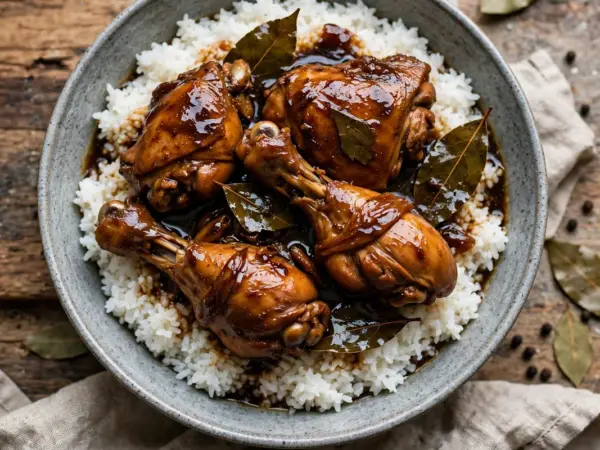
The natural Filipino pairing is Chicken Adobo — braised soy-vinegar chicken against light, citrus-finished noodles. For noodle comparisons, try Japchae, the Korean glass-noodle dish, or Chicken Pad Thai, the Thai take on rice noodles.
Storage, freezing, and reheating
- Refrigerate: Cool quickly and refrigerate promptly in an airtight container; eat within 2 days.
- Freeze: Not recommended — rice vermicelli turns soft and clumpy, and the vegetables lose their texture.
- Reheat: Reheat only once, in a skillet over medium heat with a splash of stock or water, stirring gently, until steaming hot throughout; add a fresh squeeze of lemon after reheating.
Final thoughts
Pancit Bihon is generous without being heavy: light noodles, savory chicken, crisp vegetables, and a citrus finish. If you make it, leave a rating and tell us how you served it — with calamansi, with lemon, or alongside Chicken Adobo.
Next up, try Chicken Adobo for the classic Filipino pairing, or Japchae for a Korean noodle comparison.


Leave a review