
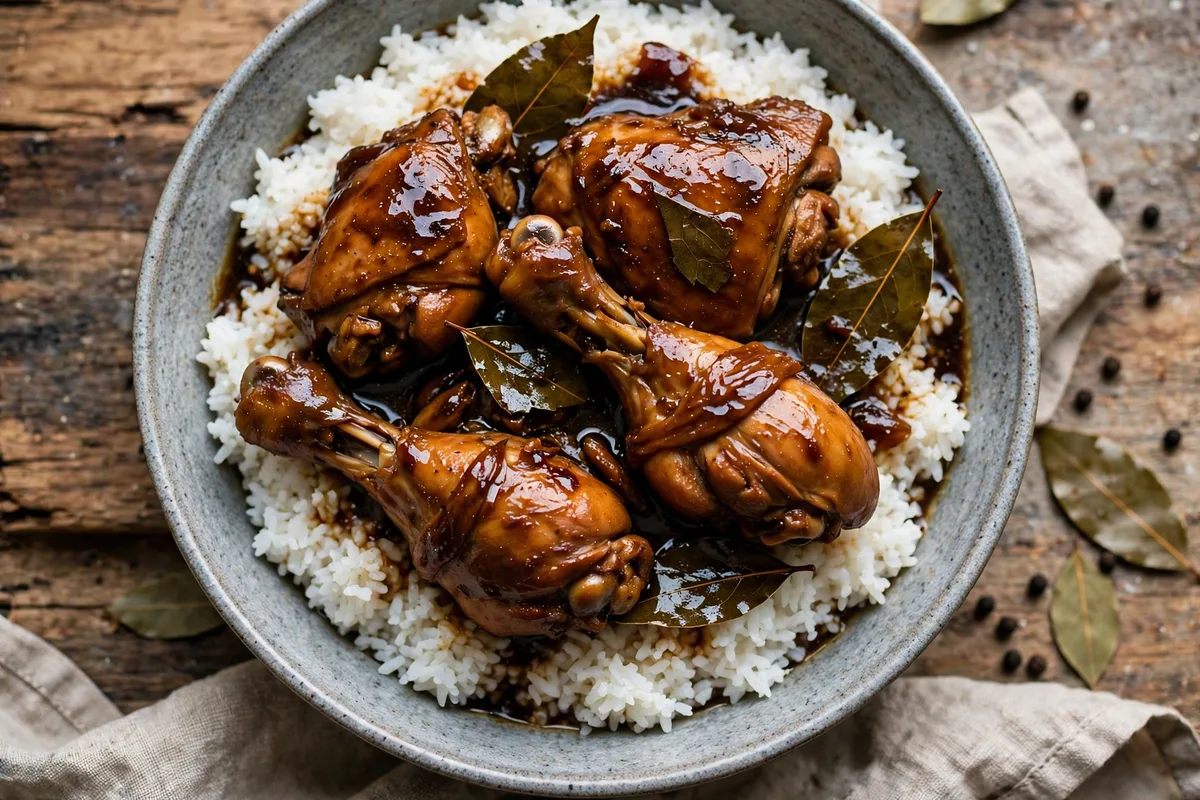
If you want a Filipino chicken dish that is savory, tangy, and deeply comforting, this easy Filipino chicken adobo recipe is a good place to start. Chicken simmers in a simple adobo sauce of soy sauce, vinegar, garlic, and bay leaves until it is tender and the sauce is rich enough to spoon over rice.
It is a practical weeknight stew: most of the cooking time is hands-off simmering, the ingredient list is short, and the flavor actually improves as it rests.
What makes it work is balance. Soy sauce brings salt and depth, vinegar brings a bright tang, garlic and bay leaves add warmth, and a little sugar rounds the edges.
What is chicken adobo?
Chicken adobo is the Philippines’ best-known home-cooked dish: chicken braised in a soy vinegar marinade with garlic, bay leaves, and black peppercorns. The chicken is usually browned first, then simmered gently in the marinade liquid until tender, and the sauce is reduced until it coats the meat.
Adobo is a cooking method with many regional variations, not one single fixed recipe. Some versions are drier and more savory, others are saucier and tangier, and some add coconut milk, sugar, or extra spices. This version stays close to the classic home-cooked idea — chicken, soy sauce, vinegar, garlic, bay leaves, and peppercorns — so it is a reliable starting point before you adjust it to your own taste.
Why you’ll love this recipe
- A short, familiar ingredient list. Soy sauce, vinegar, garlic, and bay leaves do most of the work, with no hard-to-find items.
- Mostly hands-off cooking. After a quick sear, the chicken simmers gently while you cook the rice.
- Even better the next day. The sauce settles overnight, so leftovers are a genuine bonus rather than an afterthought.
- Easy to adjust. You can make it tangier or milder, saucier or drier, using the variations below.
- Perfect with steamed rice. The sauce is made to be spooned over rice, so nothing goes to waste.
Ingredients you’ll need
Exact quantities are also given in the recipe card at the end of this article.
- Chicken: 2 lb (900 g) bone-in, skin-on chicken thighs, or 1 1/2 lb (680 g) boneless, skinless thighs. Bone-in thighs stay juicier and give the sauce more body, but boneless thighs cook a little faster.
- Soy sauce: 1/2 cup (120 ml) soy sauce. This is the main salty element, so taste before adding extra salt.
- Vinegar: 1/3 cup (80 ml) white vinegar or cane vinegar. Do not use balsamic vinegar here; its flavor is too sweet and dark for this dish.
- Water: 1 cup (240 ml) water, to simmer the chicken and keep the sauce from getting too salty.
- Garlic: 6 cloves garlic, smashed and roughly chopped. Adobo is a garlic-forward dish, so do not be shy.
- Bay leaves: 2 dried bay leaves. Remove them before serving.
- Black peppercorns: 1 teaspoon whole black peppercorns, or 1/2 teaspoon coarsely ground black pepper.
- Sugar: 1 tablespoon brown sugar, or to taste. This rounds the vinegar rather than making the dish sweet.
- Oil: 1 tablespoon neutral oil, such as vegetable or sunflower oil, for searing.
- To serve: Steamed rice, and sliced scallions (spring onions) if you like.
Substitutions in brief
Cane vinegar is traditional and mild; white vinegar is the closest widely available substitute. For a gluten-free version, use tamari or a certified gluten-free soy sauce and check that your vinegar is gluten-free. Chicken breasts can be used, but they dry out more easily, so reduce the simmering time and check the temperature early.
How to make chicken adobo
Step 1: Marinate the chicken
Combine the soy sauce, vinegar, water, garlic, bay leaves, peppercorns, and brown sugar in a bowl. Add the chicken, turn to coat, and leave for 15 minutes at room temperature while you prepare the rice and any sides. Do not marinate for hours in this strong mixture; a short marinade is enough, and the chicken will keep absorbing flavor as it simmers.
Step 2: Sear the chicken
Remove the chicken from the marinade, reserving the liquid, and pat it dry with paper towels. Heat the oil in a large, deep skillet or Dutch oven over medium-high heat. Sear the chicken, skin-side down first if using skin-on pieces, for 3 to 4 minutes per side, until lightly golden. Work in batches if the pan is crowded. The chicken does not need to be cooked through at this stage; it will finish in the sauce.
Step 3: Simmer in the adobo sauce
Return all the chicken to the pan, pour in the reserved marinade liquid, and bring to a gentle simmer. Cover, reduce the heat to low, and simmer for 25 to 30 minutes, turning the chicken once halfway through, until it is very tender.
Step 4: Check the chicken is cooked through
Chicken must reach 165°F (74°C) throughout, with no pink meat. Check the thickest part with an instant-read thermometer, away from the bone if using bone-in pieces. If it is not there yet, simmer for a few more minutes and check again.
Step 5: Reduce the sauce
Remove the lid and simmer uncovered for 5 to 10 minutes more, until the sauce has thickened slightly and tastes balanced. It should coat a spoon lightly rather than running like water. Taste now: add a pinch more sugar if the vinegar tastes sharp, or a splash of water if the sauce tastes too salty. Remove and discard the bay leaves.
Step 6: Serve
Spoon the chicken and sauce over steamed rice. Scatter with sliced scallions if you like, and serve immediately, with extra sauce on the side.
Tips for the best chicken adobo
- Do not boil the vinegar hard at the start. A gentle simmer lets the sharp edge mellow; a fierce boil can make the sauce taste harsh.
- Pat the chicken dry before searing. Surface moisture stops browning, and a light sear adds depth to the finished sauce.
- Use thighs if you can. They stay tender through a long simmer, while breasts need closer watching.
- Taste at the end, not the beginning. The sauce concentrates as it reduces, so seasoning decisions made too early can overshoot.
- If the sauce is too thin, simmer uncovered a little longer. If it is too thick or salty, stir in a splash of water and taste again.
Substitutions and variations
- Milder and less tangy: Reduce the vinegar to 1/4 cup (60 ml) and add an extra tablespoon of water. Add a little more sugar only if needed.
- Tangier: Add an extra tablespoon of vinegar at the end of cooking, a little at a time, tasting as you go.
- Saucier: Add an extra 1/2 cup (120 ml) water at the simmering stage and reduce for less time, so there is more sauce for the rice.
- Drier, more caramelized: After simmering, lift the chicken out, reduce the sauce until syrupy, then return the chicken and toss to coat.
- Gluten-free: Use tamari or a certified gluten-free soy sauce and check the vinegar label.
- Different protein: Pork shoulder, cut into chunks, works well with a longer simmer of 45 to 60 minutes. For a vegetarian version, use extra-firm tofu, pressed and pan-fried until golden, then simmered briefly in the same sauce; tofu does not need the 165°F chicken check.
What to serve with chicken adobo
Serve it with steamed rice, which is the classic pairing and soaks up the adobo sauce. A simple cucumber salad, or sliced cucumber with a squeeze of lime, makes a cool, fresh contrast to the rich, tangy stew.
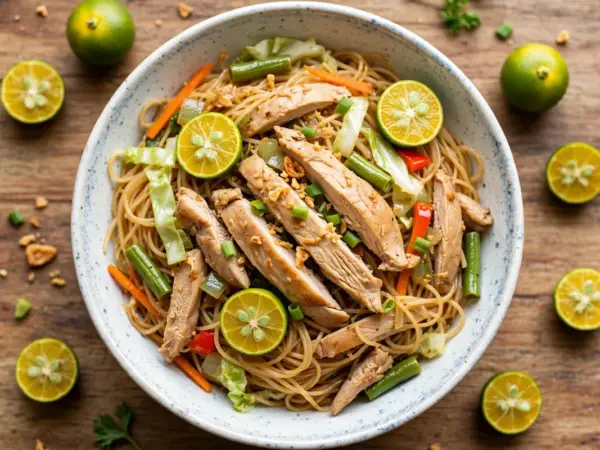
For a contrasting Filipino dish another night, Pancit Bihon offers light, stir-fried noodles instead of a braised stew. Egg Fried Rice is a useful savory rice alternative if you want a change from plain steamed rice, and Butter Chicken makes a creamy, spiced contrast from another cuisine.
For a lighter noodle-based alternative, try Easy Japchae — Korean Glass Noodles.
Storage, freezing, and reheating
- Refrigerate: Cool leftovers within 2 hours and store in an airtight container in the refrigerator for up to 3 to 4 days. The flavor often improves overnight.
- Freeze: Cooked chicken adobo can be frozen, with its sauce, for up to 2 months. Thaw overnight in the refrigerator.
- Reheat: Warm gently in a saucepan over medium-low heat, with a splash of water if the sauce has thickened, until steaming hot throughout. Do not reheat more than once.
Final thoughts
Chicken adobo earns its place as a weeknight favorite because it is simple, forgiving, and full of flavor. Once you have made it once, you will know how tangy your household likes it.
If you make it, leave a rating and tell us how you adjusted the vinegar — and try Pancit Bihon next for a completely different Filipino flavor.




Leave a review