
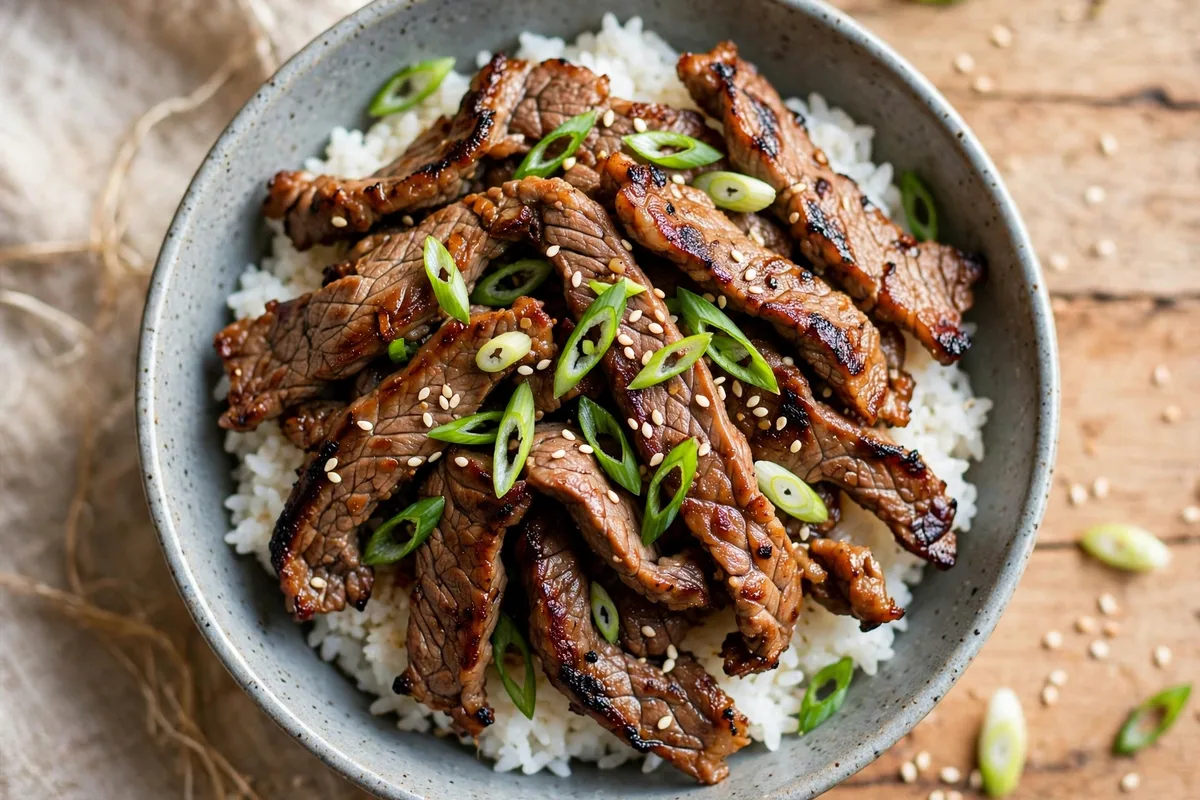
If you want a Korean main course that is sweet, savory, and fast once the marinade has done its work, this easy Korean beef bulgogi recipe is a good place to start. Thinly sliced beef is soaked in a bulgogi marinade of soy sauce, sesame, garlic, and a little sweetness, then seared quickly in a hot pan until caramelized at the edges.
It is a practical weeknight dinner: the marinade mixes in minutes, the beef cooks in minutes, and most of the time is hands-off marinating. Serve it with steamed rice and a simple vegetable side.
What is bulgogi?
Bulgogi is a Korean dish of thinly sliced beef marinated in a soy sesame marinade, then grilled or pan-seared. The marinade is the heart of the dish: soy sauce for salt and depth, sugar for caramelisation, sesame oil for a nutty aroma, garlic and ginger for warmth, and grated pear or onion for sweetness and tenderness.
The beef is cooked over high heat, so it browns quickly rather than stewing. At home, a large skillet or cast-iron pan works well, provided it is hot and the beef is not crowded — cooked in batches, the slices sear and caramelize; cooked all at once, they steam.
Bulgogi is not japchae. Japchae is a stir-fried dish of sweet potato glass noodles tossed with vegetables and a soy and sesame sauce, with no broth. Bulgogi, by contrast, is the marinated beef itself, grilled or pan-seared and served with rice or wrapped in lettuce.
Why you’ll love this recipe
- Fast once marinated. The beef sears in about 10 minutes, so dinner is ready soon after the marinade time is up.
- A simple, familiar marinade. Soy sauce, sesame oil, garlic, ginger, and sugar do all the work.
- Tender, caramelized beef. Thin slices and a very hot pan give browned edges without drying the meat out.
- Easy to serve many ways. Spoon it over steamed rice, wrap it in lettuce leaves, or add it to a bowl with vegetables.
Ingredients you’ll need
Exact quantities are also given in the recipe card at the end of this article.
- Beef: 1 1/2 lb (680 g) beef sirloin or ribeye, sliced as thinly as possible across the grain. Partially freezing the beef for 30 to 45 minutes first makes thin slicing much easier.
- Soy sauce: 1/4 cup (60 ml) soy sauce. This is the main salty element, so taste before adding extra salt.
- Sugar: 2 tablespoons (25 g) brown sugar, or to taste. It helps the beef caramelize in the pan.
- Sesame oil: 1 tablespoon (15 ml) toasted sesame oil, plus a little more for finishing if you like.
- Garlic and ginger: 4 cloves garlic, finely minced, and 1 tablespoon (15 g) finely grated fresh ginger.
- Pear or onion: 1/4 Asian pear or small apple, finely grated, or 1/2 small onion, finely grated. Either adds sweetness and helps tenderise the beef.
- Scallions (spring onions) and sesame: 2 scallions, thinly sliced, and 1 tablespoon toasted sesame seeds, to finish.
- Vegetables (optional): 1 small onion, thinly sliced, and 1 small carrot, cut into thin matchsticks, to cook with the beef if you like.
- Oil for cooking: 1 tablespoon neutral oil, such as vegetable or sunflower oil, for searing.
- To serve: Steamed rice, lettuce leaves, and kimchi or a simple cucumber salad if you like.
Substitutions in brief
For a gluten-free version, use tamari or a certified gluten-free soy sauce. If you cannot find Asian pear, a small apple or half an onion, finely grated, works well. Flank or skirt steak can replace sirloin or ribeye if sliced thinly across the grain.
How to make Korean beef bulgogi
Step 1: Slice the beef
If the beef is not already thinly sliced, freeze it for 30 to 45 minutes until firm but not frozen solid, then slice it as thinly as you can across the grain. Keep the sliced beef cold while you mix the marinade.
Step 2: Mix the marinade
Whisk the soy sauce, brown sugar, sesame oil, garlic, ginger, and grated pear or onion in a large bowl until the sugar dissolves. Add the beef and turn it until coated. Cover and marinate for 20 minutes at room temperature, or refrigerate for up to 2 hours. Do not leave marinated beef at room temperature for more than 2 hours in total.
Step 3: Heat the pan
Heat the neutral oil in a large skillet, cast-iron pan, or wok over high heat until it shimmers. The pan must be very hot before the beef goes in, or the beef will steam instead of searing. Have a plate ready for the cooked beef.
Step 4: Sear the beef in batches
Lift the beef from the marinade, letting excess marinade drip back into the bowl, and add it to the pan in a single layer. Do not crowd the pan. Sear for 1 to 2 minutes on the first side, until browned, then turn and sear for 1 minute more. Cooked beef must be browned and cooked through, with no pink meat remaining and steaming hot throughout. Remove to the plate and repeat with the remaining beef, adding a little more oil if needed.
Step 5: Cook the vegetables, if using
If using onion and carrot, add them to the same hot pan with a splash of water and cook for 2 to 3 minutes, stirring, until just softened. Discard any leftover marinade that has touched raw beef.
Step 6: Serve
Return the beef to the pan with the vegetables if using, toss briefly, and scatter with the remaining scallions and sesame seeds. Serve immediately over steamed rice, or with lettuce leaves for wrapping, and kimchi or cucumber salad on the side.
Tips for the best Korean beef bulgogi
- Slice thinly, across the grain. Thick slices stay chewy, and slices cut with the grain stay tough. Partial freezing is the easiest way to get thin, even slices.
- Keep the pan very hot. A hot pan gives caramelized edges. If the pan cools, the beef releases liquid and steams.
- Do not crowd the pan. Cook in two or three batches if needed. Crowded beef never browns properly.
- Do not overcook the beef. Thin slices need only a couple of minutes; longer cooking dries them out.
- Marinate briefly. Twenty minutes is enough for thin slices; much longer, especially with grated pear, can make the beef surface mushy.
Substitutions and variations
- Gluten-free: Use tamari or a certified gluten-free soy sauce, and check the sesame oil label.
- Less sweet: Reduce the brown sugar to 1 tablespoon and taste before adding more. The pear or onion still gives gentle sweetness.
- Sweeter: Add an extra teaspoon of brown sugar, or a little more grated pear, and let the beef caramelize a touch longer, watching that it does not burn.
- No pear or apple: Use half a small onion, finely grated, instead. The flavor will be a little less fruity but still balanced.
- Spicier: Add 1 to 2 teaspoons of gochujang (Korean chili paste) to the marinade, checking the label if you need a gluten-free version.
- More vegetables: Add sliced mushrooms, bell pepper, or zucchini with the onion and carrot, keeping the total modest so the beef still sears well.
What to serve with Korean beef bulgogi
Serve it with steamed rice, which soaks up the savory juices from the pan. Lettuce leaves make a lighter alternative: wrap the beef with rice, kimchi, and a little cucumber or carrot.
For a fuller Korean meal, add kimchi on the side for a sharp, spicy contrast, or a simple cucumber salad for freshness. Japchae makes a natural partner for another night, while a Chicken Teriyaki Rice Bowl offers a similar weeknight format with a Japanese flavor. Egg Fried Rice also works well as a simple side with the savory beef.
Storage, freezing, and reheating
- Refrigerate: Cool leftovers within 2 hours and store in an airtight container in the refrigerator for up to 3 to 4 days.
- Freeze: Cooked bulgogi can be frozen, with its sauce, for up to 2 months. Thaw overnight in the refrigerator.
- Reheat: Warm gently in a skillet over medium heat, with a splash of water if needed, until steaming hot throughout. Do not reheat more than once, and do not leave cooked beef at room temperature for more than 2 hours.
Final thoughts
Bulgogi earns its place as a weeknight favorite because it is simple and fast once the slicing is done. Thin beef, a balanced marinade, and a very hot pan are all it needs.
If you make it, leave a rating and tell us how you served it — over rice, in lettuce wraps, or with japchae on the side. And if you are building a Korean cooking routine, try Japchae next for a lighter, noodle-based contrast to this caramelized beef.




Leave a review