
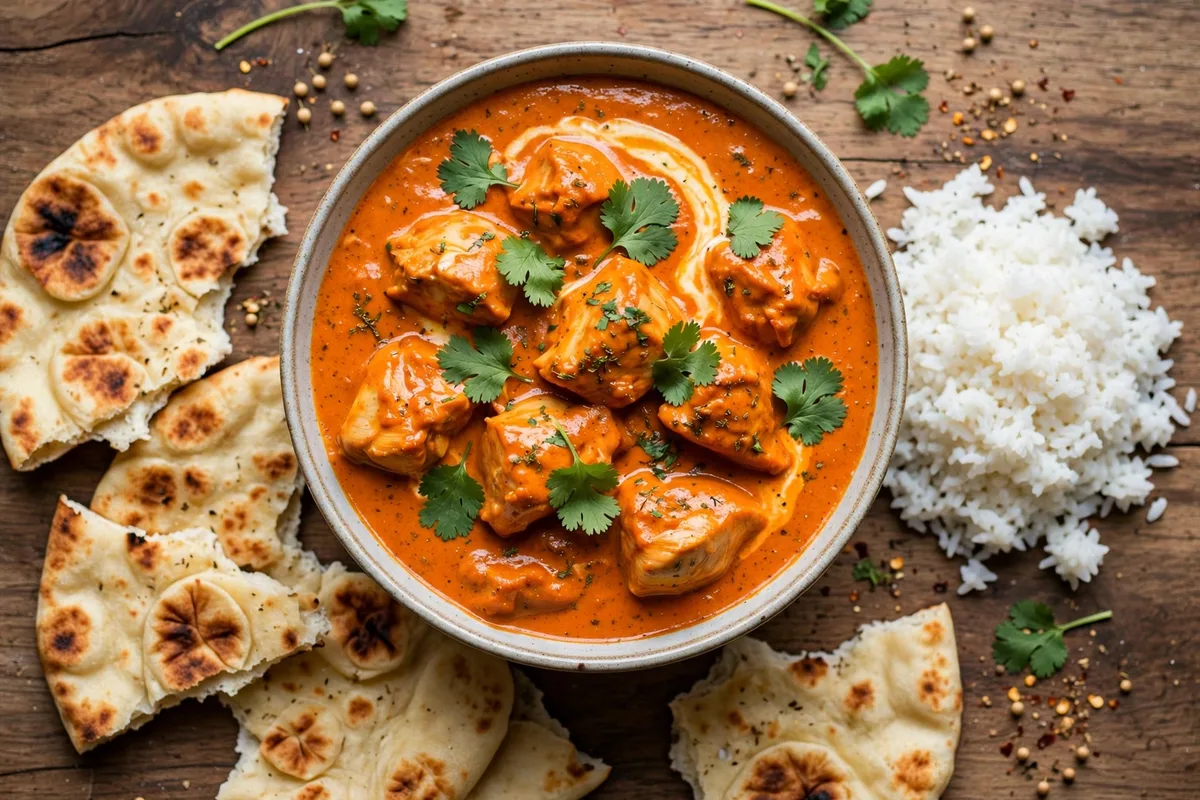
If you love a rich, comforting Indian curry but want to make it at home, this easy butter chicken recipe at home is a good place to start. Tender chicken is cooked in a smooth tomato cream curry, flavoured with garam masala, ginger, and garlic, and finished with butter and cream for a sauce that is silky rather than heavy.
It is simpler than it looks. The chicken is marinated briefly while you start the sauce, the sauce is blended smooth, and everything comes together in one pan. Serve it with naan and rice, which are made for scooping up every last spoonful of sauce.
The key is balance. Tomatoes give the sauce its gentle tang, cream and butter give it body, and a little sugar and garam masala round the flavor out. A squeeze of lemon at the end keeps it bright, so the richness never feels dull.
What is butter chicken?
Butter chicken, also known as murgh makhani, is a North Indian curry of cooked chicken in a smooth, buttery tomato and cream sauce. The sauce is usually blended until silky, then simmered with butter, cream, and warm spices, so it tastes rich, mildly spiced, and slightly sweet rather than fiery.
It differs from chicken tikka masala in one useful way: butter chicken sauce is generally smoother, sweeter, and more buttery, with tomato and cream doing most of the work, while tikka masala is often more heavily spiced and tangier. This version stays close to the home-cooked idea — marinated chicken, a blended tomato cream curry, garam masala, butter, and cream.
Why you’ll love this recipe
- Restaurant-style comfort at home. A blended tomato cream curry, butter, and garam masala give the familiar rich flavor without a long ingredient list.
- One pan for the sauce and chicken. Once the sauce is blended, the chicken finishes cooking in it, so there is little washing up.
- Mild enough for the whole table. The heat is gentle and easy to adjust, so it suits cooks who prefer a milder curry.
- Perfect with naan and rice. The sauce is made to be scooped up, so serve it with warm naan and steamed rice.
Ingredients you’ll need
Exact quantities are also given in the recipe card at the end of this article.
For the chicken and marinade
- Chicken: 1 1/2 lb (680 g) boneless, skinless chicken breasts or thighs, cut into bite-sized pieces. Thighs stay juicier.
- Yogurt: 1/2 cup (120 ml) plain yogurt, full-fat if possible.
- Spices and aromatics for the marinade: 1 tablespoon (15 ml) lemon juice, 1 teaspoon (5 g) garam masala, 1 teaspoon (3 g) ground cumin, 1 teaspoon (3 g) smoked or sweet paprika, 1/2 teaspoon (1.5 g) ground turmeric, 1 tablespoon (15 g) finely grated fresh ginger, and 2 cloves garlic, finely minced.
- Salt: 1 teaspoon (6 g) salt, or to taste.
For the butter chicken sauce
- Butter: 3 tablespoons (45 g) unsalted butter.
- Onion and aromatics: 1 medium onion, finely chopped; 1 tablespoon (15 g) finely grated fresh ginger; and 3 cloves garlic, finely minced.
- Tomatoes: 1 can (14 oz / 400 g) chopped tomatoes, or 1 1/2 lb (680 g) fresh ripe tomatoes, chopped.
- Spices: 1 tablespoon (7 g) garam masala, 1 teaspoon (3 g) ground cumin, 1 teaspoon (3 g) ground coriander, and 1/2 teaspoon (1 g) chili powder, or to taste.
- Cream: 3/4 cup (180 ml) heavy cream, plus a little more to drizzle if you like.
- Sugar and lemon: 1 teaspoon (4 g) sugar, or to taste, and 1 tablespoon (15 ml) lemon juice.
- To serve: Fresh cilantro (coriander) leaves, warm naan, and steamed rice.
Substitutions in brief
If you do not eat dairy, this is not a straightforward swap: the butter and cream define the sauce. A dairy-free version can use a neutral oil in place of butter and a plain, unsweetened plant-based cream, but the flavor will be lighter and less rich. Check that your garam masala is gluten-free if needed.
How to make butter chicken
Step 1: Marinate the chicken
Mix the yogurt, lemon juice, garam masala, cumin, paprika, turmeric, ginger, garlic, and salt in a bowl. Add the chicken and stir until coated. Leave it for at least 15 minutes at room temperature, or cover and refrigerate for up to 2 hours. Do not leave marinated chicken at room temperature for more than 2 hours in total.
Step 2: Cook the chicken
Heat a large skillet or pan over medium-high heat. Cook the chicken in a single layer, in batches if needed, for 3 to 4 minutes on each side, until lightly browned. It does not need to be fully cooked yet, as it will finish in the sauce. Remove to a clean plate.
Step 3: Start the sauce
Melt the butter in the same pan over medium heat. Cook the onion for 5 to 6 minutes, until soft and lightly golden. Add the ginger and garlic and cook for 1 minute more, until fragrant, taking care not to burn the garlic.
Step 4: Add tomatoes and spices
Add the tomatoes, garam masala, cumin, coriander, and chili powder if using. Stir well and simmer gently for 10 to 12 minutes, until the tomatoes have softened and the sauce has thickened slightly.
Step 5: Blend until smooth
Carefully blend the sauce until completely smooth, using an immersion blender in the pan or a blender in batches. If using a jug blender, let the sauce cool slightly first, fill it only halfway, and hold the lid down with a folded towel. Return the sauce to the pan.
Step 6: Finish with cream and chicken
Stir in the cream, sugar, and lemon juice. Return the chicken and any juices to the pan. Simmer gently for 8 to 10 minutes, stirring occasionally, until the sauce is silky and the chicken is cooked through. Chicken must reach 165°F (74°C) throughout, with no pink meat. Check the thickest piece with a thermometer or by cutting it open. Taste and adjust salt, sugar, or lemon, then scatter with coriander and serve with naan and rice.
Tips for the best butter chicken
- Blend the sauce well. A truly smooth sauce is what makes butter chicken feel rich, so blend until no tomato pieces remain.
- Keep the simmer gentle. A hard boil can split cream and toughen chicken, so keep the heat low once the cream is in.
- Brown the chicken first. A little color on the chicken adds flavor, even though it finishes cooking in the sauce.
- Taste at the end. Tomatoes vary in acidity, so add sugar and lemon a little at a time until the sauce tastes balanced.
Substitutions and variations
- Milder: Leave out the chili powder and use sweet paprika in the marinade. The garam masala still gives plenty of warmth.
- Spicier: Add an extra 1/2 teaspoon of chili powder, or a chopped green chili with the onions. Taste as you go.
- Chicken thighs or breasts: Thighs stay juicier and are more forgiving. Breasts work well too, but cut them evenly and check the temperature carefully.
- No blender: The sauce can be left unblended for a more rustic curry, but it will not have the classic smooth butter chicken texture. Push it through a sieve if you want it smoother without a blender.
- Gluten-free: This recipe is naturally gluten-free as written, but check the garam masala label and serve with rice rather than naan if needed.
What to serve with butter chicken
Serve it with warm naan and steamed rice, which are the classic pairings for scooping up the tomato cream curry. A simple cucumber salad, or sliced cucumber with lemon and salt, makes a cool contrast to the rich sauce.
For a contrasting curry another night, try Thai Green Curry Chicken, which is herbal and coconut-based rather than buttery and tomato-based. Korean Beef Bulgogi offers a cross-cuisine contrast, as a marinated, caramelized meat dish served with rice.
If you are in the mood for noodles instead, Easy Japchae — Korean Glass Noodles is a lighter, sesame-scented option from this batch.
Storage, freezing, and reheating
- Refrigerate: Cool leftovers promptly, within 2 hours, and store in an airtight container in the refrigerator for up to 3 days. Cream sauces should not be left at room temperature.
- Freeze: Cooked butter chicken can be frozen for up to 2 months, though the cream sauce may look slightly grainy after thawing. Thaw overnight in the refrigerator.
- Reheat: Warm gently in a saucepan over low heat, stirring, until steaming hot throughout. Reheat only once, and do not boil hard, as this can split the cream.
Final thoughts
Butter chicken earns its place as a weeknight favorite because it is rich without being complicated. Once you have made the sauce once, you will know how much sugar and lemon your tomatoes need and how mild or spicy your household prefers it.
If you make it, leave a rating and tell us how you served it — and try Chicken Adobo next for a completely different kind of savory, tangy chicken dish.


Leave a review