
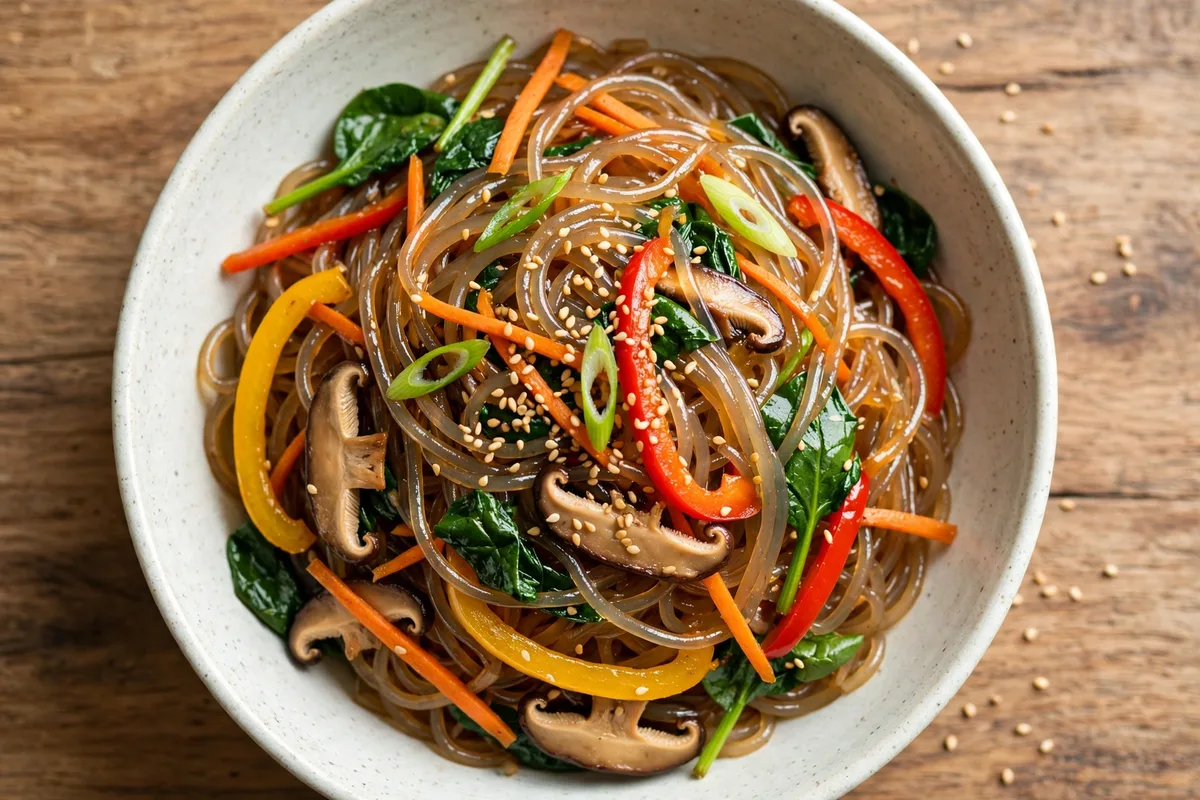
If you want a Korean noodle dish that works warm from the pan or at room temperature, this easy japchae recipe is a good place to start. Sweet potato glass noodles are tossed with colourful vegetables, a savory-sweet soy and sesame dressing, and beef or tofu, until everything is glossy and lightly chewy.
Each vegetable is cooked briefly in the same pan, the noodles are boiled and seasoned, and everything is tossed together at the end. Sesame oil, added at the end, gives japchae its distinctive nutty aroma.
What is japchae?
Japchae is a Korean dish made with dangmyeon, glass noodles made from sweet potato starch. When cooked, they turn clear and slightly chewy, quite different from wheat noodles. They are tossed with stir-fried vegetables — usually spinach, carrots, mushrooms, onions, and peppers — and seasoned with soy sauce, sugar, garlic, and sesame oil, then scattered with sesame seeds.
The flavor is savory and gently sweet rather than spicy. It is often served as a side dish at celebrations, but with a protein added it makes a complete main course too.
Japchae is not ramen or udon. Ramen uses thin wheat noodles in broth, and udon uses thick wheat noodles, often in soup. Japchae is stir-fried instead: the glass noodles are boiled, drained, and tossed with vegetables and sauce, with no broth.
Why you’ll love this recipe
- A complete one-pan noodle dish. Vegetables, noodles, and protein come together in about 40 minutes.
- Colourful and flexible. Swap the vegetables for what you have, and use beef, tofu, or no protein at all.
- Great warm or at room temperature. Japchae keeps its texture well, so it suits packed lunches and buffets as well as dinner.
- A gentle introduction to Korean flavors. Soy, sesame, garlic, and a little sweetness give a balanced taste without heat.
Ingredients you’ll need
Exact quantities are also given in the recipe card at the end of this article.
- Sweet potato glass noodles: 8 oz (225 g) dangmyeon, sometimes labeled sweet potato starch noodles; Korean grocery stores or international aisle of larger supermarkets
- Beef (optional): 8 oz (225 g) thinly sliced beef sirloin or ribeye; vegetarian: leave out, use tofu option in variations
- Spinach: 4 cups (about 120 g) fresh baby spinach, or 5 oz (140 g) frozen spinach, thawed and squeezed dry
- Vegetables: 1 medium carrot, thin matchsticks; 1 small onion, thinly sliced; 1 red bell pepper, thinly sliced; 4 oz (115 g) mushrooms, thinly sliced; shiitake traditional, any mushrooms work
- Sauce and seasoning: 1/4 cup (60 ml) soy sauce, 2 tablespoons (25 g) sugar, 2 tablespoons (30 ml) sesame oil in total, 3 cloves garlic finely minced, 1 tablespoon (15 ml) neutral oil for cooking, 1 teaspoon (5 ml) rice vinegar optional
- To finish: 1 tablespoon toasted sesame seeds and 2 scallions (spring onions), thinly sliced
Substitutions in brief
For a gluten-free version, use tamari or certified gluten-free soy sauce and check the noodles. If you cannot find sweet potato glass noodles, thin rice vermicelli gives a similar result, though softer, so cook it for less time.
How to make japchae
Step 1: Cook the noodles
Bring a large pot of water to a boil. Cook the sweet potato glass noodles according to the packet, usually 6 to 8 minutes, until tender but still slightly chewy. Drain, rinse briefly under cold water, and cut the noodles once or twice with kitchen scissors so they are easier to toss and serve. Toss with 1 tablespoon of sesame oil so they do not stick together.
Step 2: Blanch the spinach
Blanch the spinach in boiling water for about 30 seconds, just until wilted. Drain, rinse under cold water, and squeeze out as much water as you can. Toss with a pinch of salt and a few drops of sesame oil, and set aside.
Step 3: Cook the beef, if using
Heat the neutral oil in a large skillet or wok over medium-high heat. Add the sliced beef in a single layer and cook for 2 to 3 minutes, stirring, until browned and cooked through, with no pink meat remaining and the beef steaming hot throughout. Remove to a plate. Do not serve beef that is still pink or undercooked.
Step 4: Stir-fry the vegetables
In the same pan, cook the onion and carrot for 2 to 3 minutes until just softened. Add the mushrooms and bell pepper and cook for a further 2 to 3 minutes, until tender-crisp. Season lightly with salt, then transfer to a large bowl.
Step 5: Make the sauce
In a small bowl, whisk the soy sauce, sugar, garlic, rice vinegar if using, and the remaining 1 tablespoon of sesame oil until the sugar dissolves. It should taste savory, lightly sweet, and nutty.
Step 6: Toss everything together
Return the noodles to the pan over medium heat, pour over the sauce, and toss for 1 to 2 minutes until coated and warmed through. Add the spinach, vegetables, and beef if using, toss gently, and scatter with sesame seeds and scallions.
Tips for the best japchae
- Do not overcook the noodles. Slightly chewy noodles hold up when tossed; overcooked noodles clump and turn mushy.
- Cut the noodles. A few snips with kitchen scissors make japchae far easier to toss, serve, and eat.
- Toss the noodles in sesame oil right away. It stops them sticking into one solid mass while you cook the vegetables.
- Cook the vegetables in stages. Crowding everything into the pan at once steams them instead of stir-frying them, and the colors go dull.
- Squeeze the spinach well. Water left in the spinach thins the sauce and makes the finished dish soggy.
Substitutions and variations
- Vegetarian: Omit the beef; use 8 oz (225 g) extra-firm tofu, pressed, cubed, and pan-fried golden, or double the mushrooms.
- Gluten-free: Use tamari or a certified gluten-free soy sauce, and check the noodles are certified gluten-free.
- Different vegetables: Try zucchini, shredded cabbage, or baby corn; keep the total amount roughly the same.
- More protein: Add a fried or soft-boiled egg on top; cook eggs until the white is fully set.
- Less sweet: Reduce the sugar to 1 tablespoon and taste before adding more.
What to serve with japchae
Japchae is a complete main course as written, especially with beef or tofu added. For a fuller Korean meal, serve it with kimchi on the side, which adds a sharp, spicy contrast to the gently sweet noodles. A simple cucumber salad also works well.
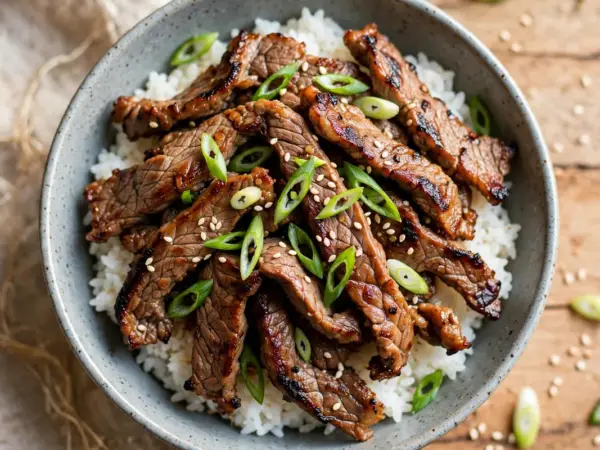
Korean Beef Bulgogi makes a natural partner: its marinated, caramelized meat contrasts with the lighter, sesame-scented noodles. A Chicken Teriyaki Rice Bowl offers a similar weeknight format with a Japanese flavor.
From this batch, Easy Butter Chicken Recipe at Home makes a rich, creamy contrast, while Easy Filipino Chicken Adobo Recipe offers a savory, tangy braise.
Storage, freezing, and reheating
- Refrigerate: Cool leftovers within 2 hours and store in an airtight container for 3–4 days.
- Freeze: Not recommended. Glass noodles turn soft and watery after thawing, and the vegetables lose their texture.
- Reheat: Warm gently in a skillet with a splash of water until steaming hot throughout. Do not reheat more than once. It is also good at room temperature the next day.
Final thoughts
Cook the noodles just until chewy, keep the vegetables bright, and let sesame oil do the finishing work. Once you have made it once, you will know how sweet and sesame-rich you like it.
If you make it, leave a rating and tell us which vegetables and protein you chose — and try Korean Beef Bulgogi next for another classic Korean main course.



Leave a review